 Croatia Waterfalls
 from $110.19
Zagreb: Plitvice & Rastoke Guided Trip with Ticket (ENG/ESP)
Semi-private day trip from Zagreb pairing the Plitvice lakes with the Rastoke mill village, ticket included.
Check AvailabilityCroatia waterfalls come in two flagship parks and a handful of karst rivers — more walkable waterfall country than most coastlines manage — and the practical rules decide everything: which falls charge seasonal tickets, which ban bathing outright, which rivers let you swim under the cascade for free. This guide verifies the ticket bands, the boat rides, the bathing rules and the roads, and prints the date every figure was checked.
Verified this quarter: Croatia's waterfall circuit starts with two parks. Plitvice Lakes — 16 terraced lakes, UNESCO-listed since 1979 — prices adult day passes in seasonal bands that run roughly €10-40 and includes the boats and sightseeing trains; bathing and drones are banned. Krka near Šibenik is cheaper and easier to reach from the coast, its Skradinski buk barrier is the widest tufa curtain in Europe, the boat from Skradin is included — and swimming has been forbidden since January 2021. The free-and-swimmable half of the country lives on the Mrežnica, Zrmanja and Una rivers and at villages like Rastoke. If you must pick one park, the comparison page decides it by trip type; if you have a week, the road trip route chains all of them.
Key takeaways
Every waterfall trip here resolves into five choices. Decide these and the rest of the itinerary writes itself:
Plitvice is the bigger, more expensive spectacle with trains and boats; Krka is a half-day from the coast with one wide barrier. The comparison prices both honestly.
Both flagship parks price by season and by hour; children and students ride cheaper. The full 2026 band table with official links.
Swimming under a waterfall is the whole point for many travelers — legal on the Mrežnica, Zrmanja, Una and at Istrian falls, banned inside the two parks.
Buses reach Plitvice and Krka directly; the Mrežnica and Štrbački buk practically require wheels — or a day tour. The honest mode-by-mode matrix.
One park is a day; both parks plus Rastoke fill two; the road trip through the river country wants a week. The stay-length arithmetic.
A first visit routes through these six. Each links to a full page with verified tickets, access notes and the practical quirks that decide a visit:
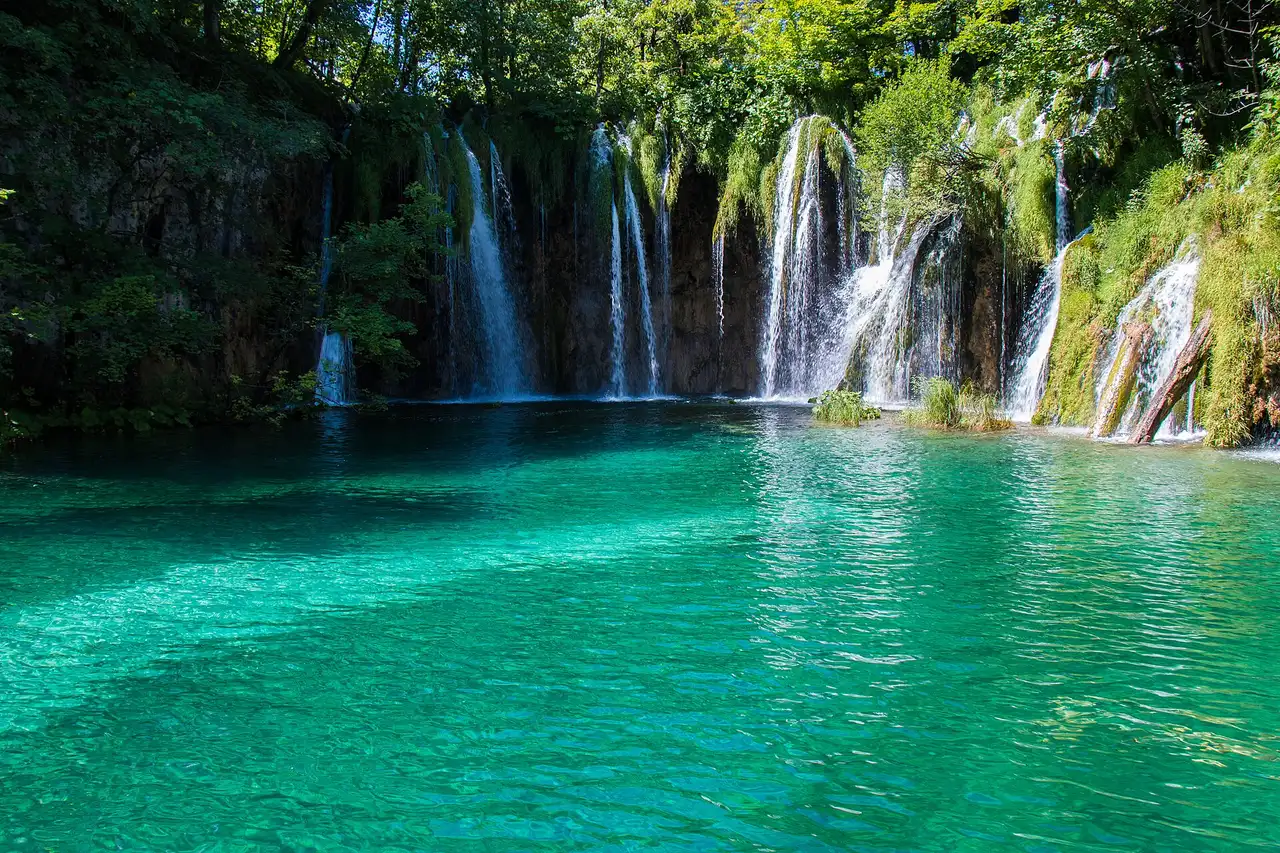
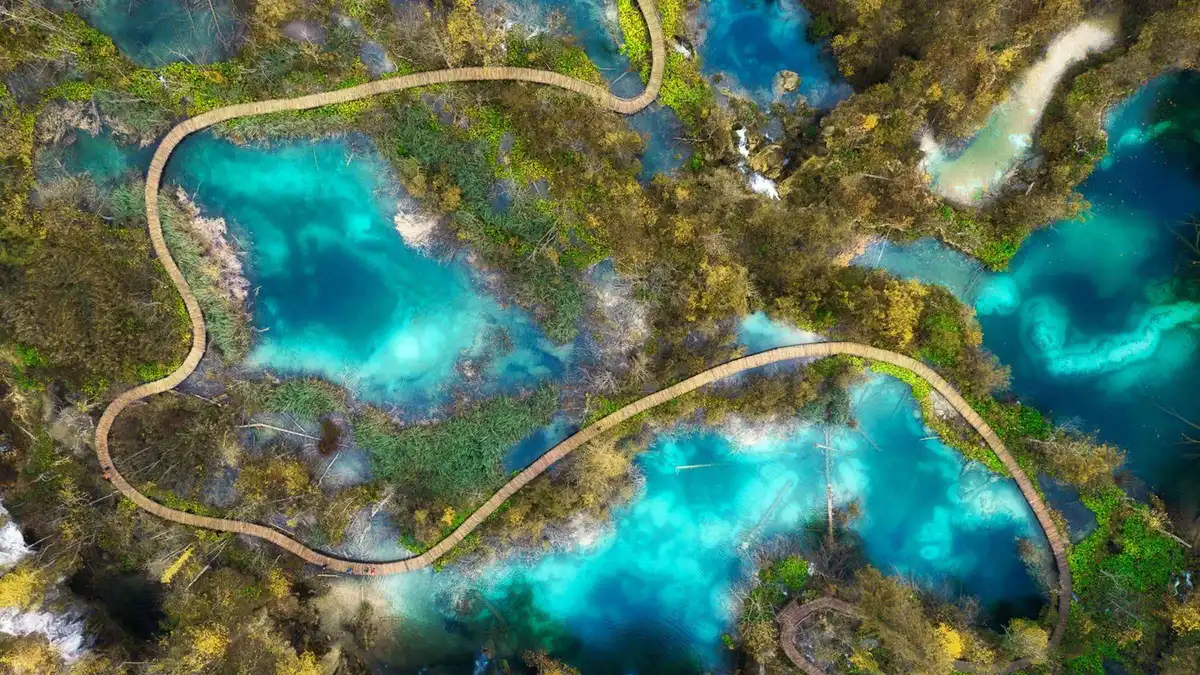
Sixteen terraced lakes stitched together by tufa barriers, headlined by the 78 m Veliki Slap. Seasonal ticket bands, boats and trains included, bathing banned.
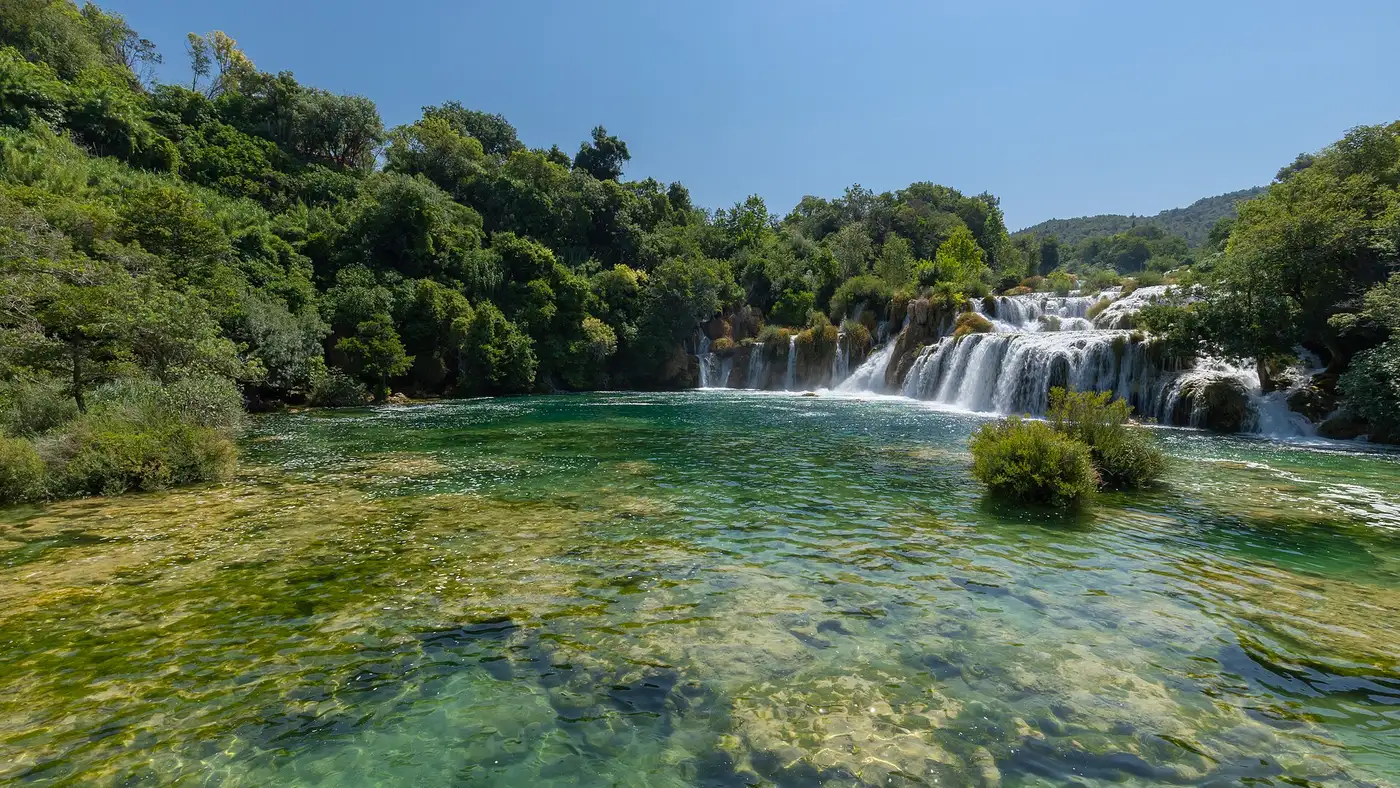
Europe's widest tufa curtain, reached by boat from Skradin; tickets run cheaper than Plitvice, the boat is included, and swimming has been banned since 2021.
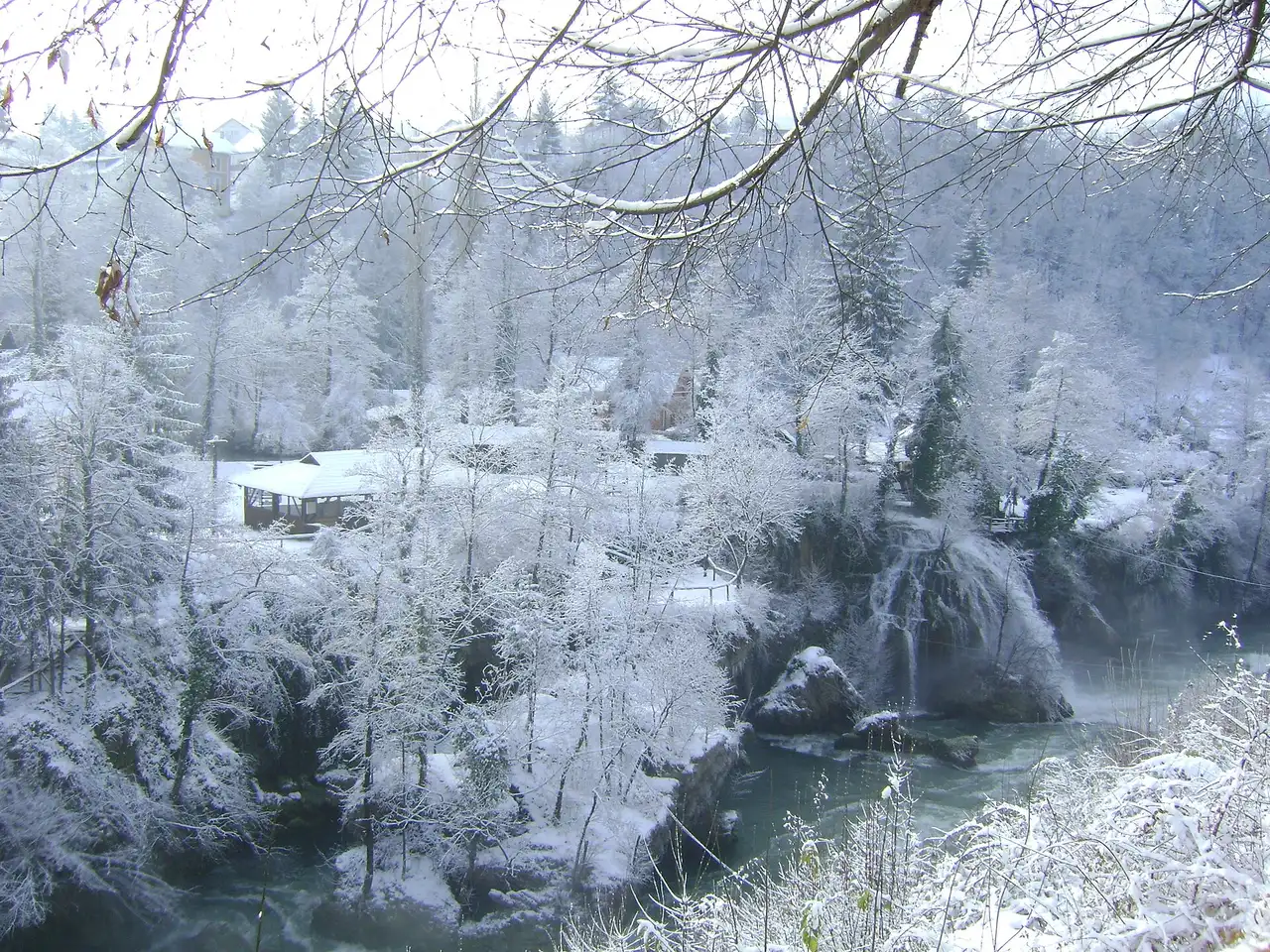
The village where the Slunjčica fans across mills and weirs above the Korana — 'Little Plitvice' for the price of a coffee, thirty minutes from the park.
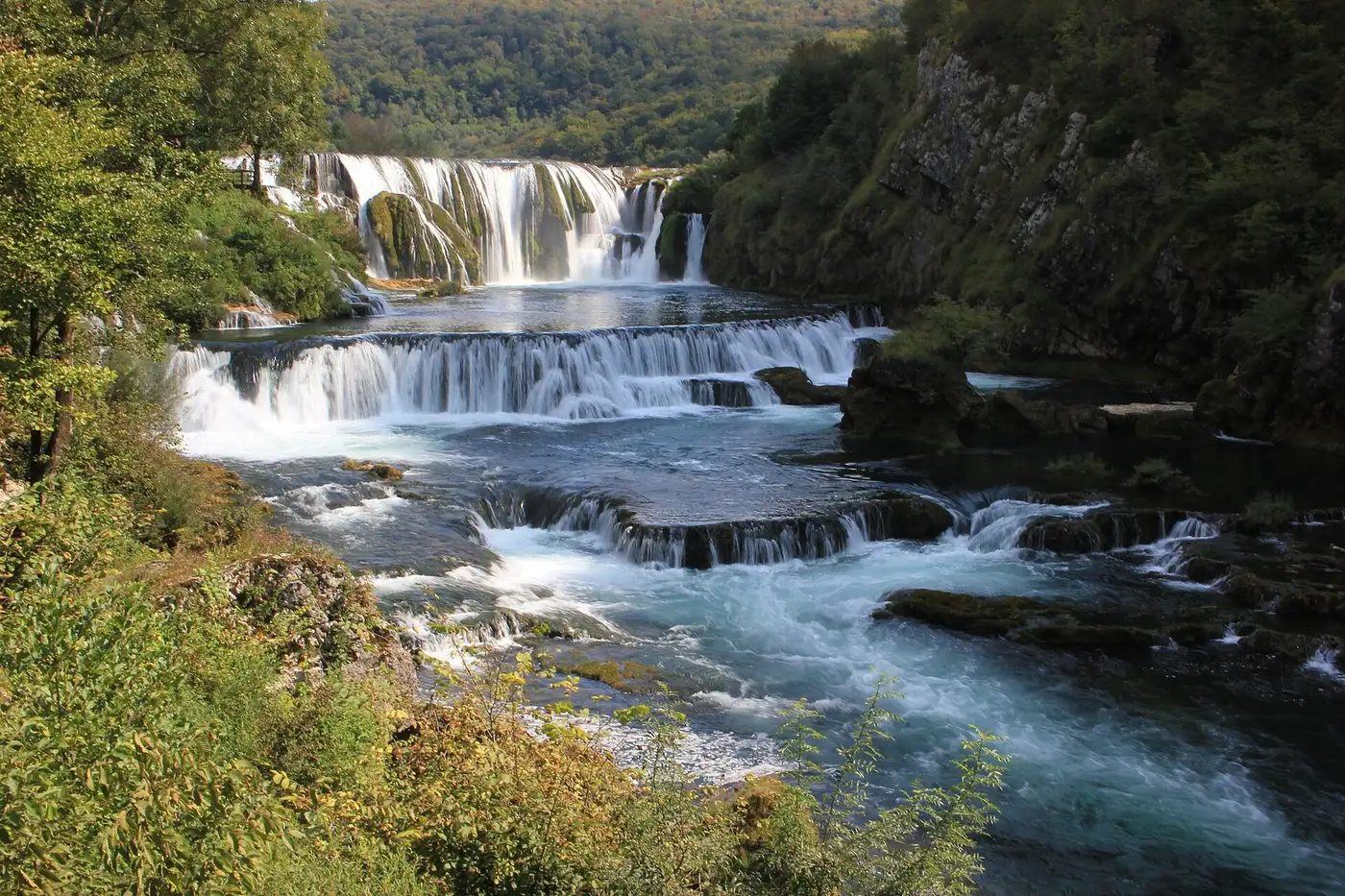
The Una river's signature falls near Donji Lapac — a multi-step cascade you view from rock terraces, free to visit and fringed by swimming pools.
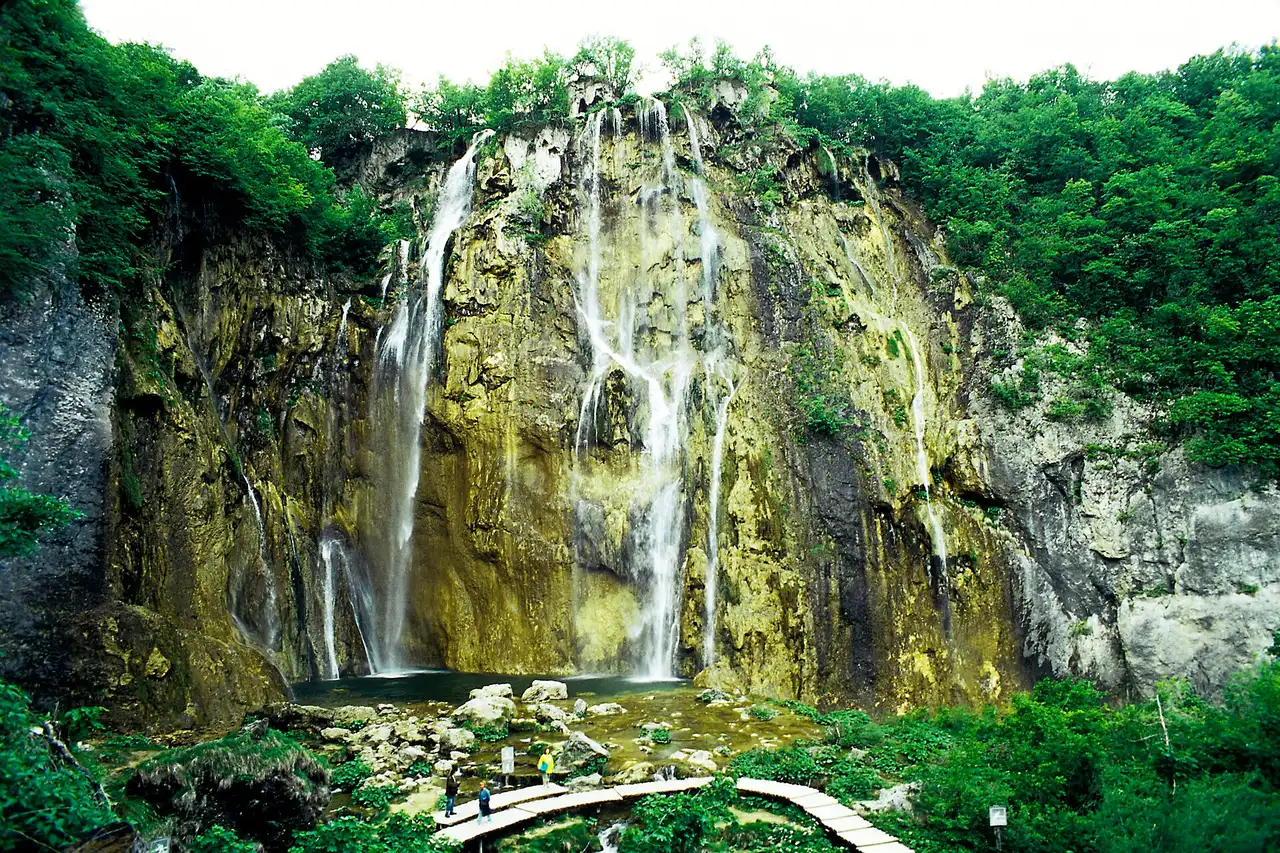
Croatia's tallest waterfall: a 78 m ribbon off the Plitvice cliff that thunders loudest in spring and shrinks to a lace curtain by late summer.
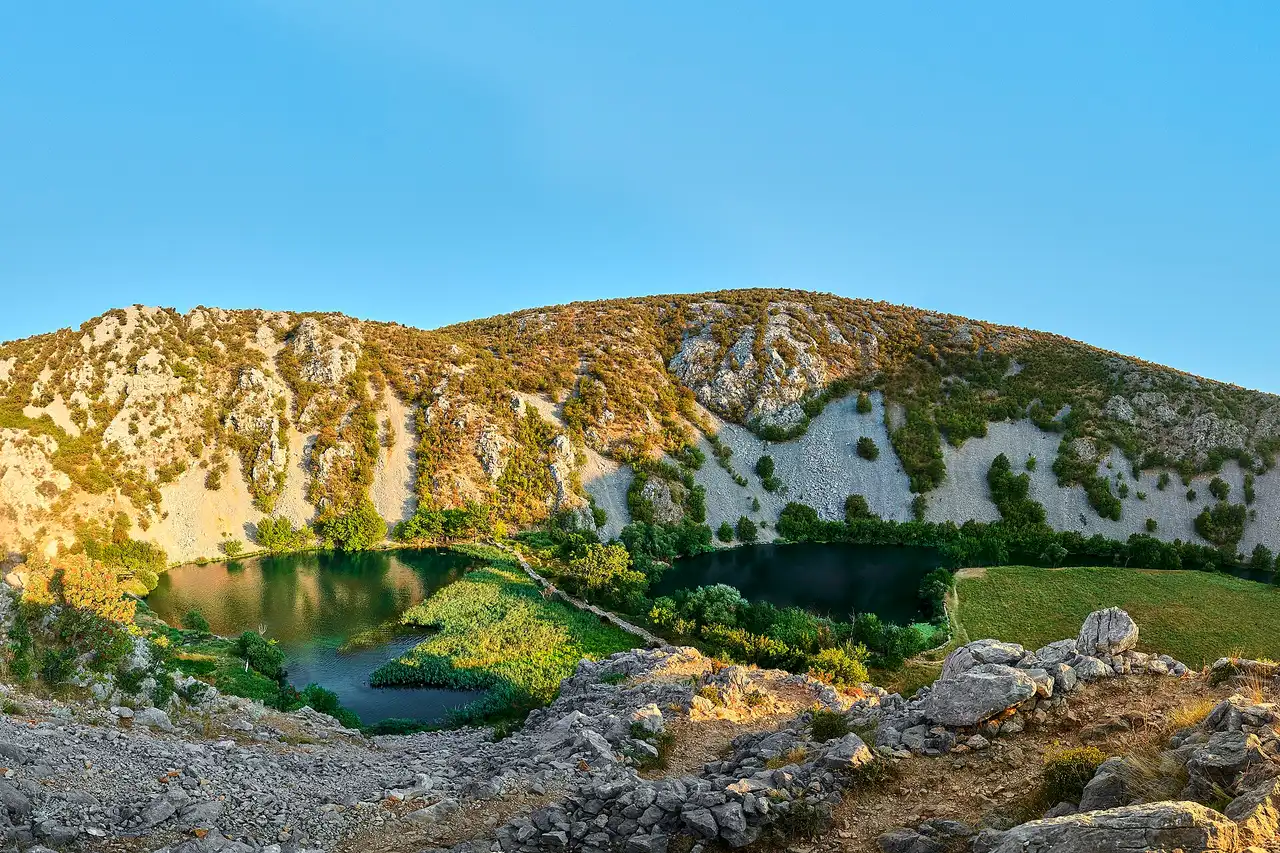
Emerald water between white limestone walls, kayak-friendly rapids and the Krupa's own falls — the Winnetou river, an hour inland from Zadar.
Croatia's falls cluster into six practical groups, and knowing the geography saves more time than any packing list. The karst lakes group is Plitvice and its satellites: the park itself, the Rastoke mill village at Slunj where the Slunjčica repeats the same travertine trick at village scale, and the upper Korana country. The Dalmatian barrier group is the Krka: Skradinski buk as the headliner, then the quieter upstream steps — Roški slap, Manojlovac slap, Bilušića buk, Miljacka slap — and the Krčić spring-fall near Knin. The canyon rivers group is the Zrmanja and its Krupa tributary in the north and the Cetina with Velika Gubavica in the south — whitewater and canyoning country.
The fourth group is the swimming rivers: the Mrežnica between Generalski Stol and Duga Resa, the warm, green cascade river where bathing is the entire point. The fifth is Istria: short, steep karst streams — Sopot near Buzet, the mill pools of Kotli, the tufa roof of Zarečki krov and the disappearing Pazin abyss. The sixth is the highlands and the east: Vražji prolaz with its Skakavac drop in Gorski Kotar, and Skakavac at Jankovac in the Papuk hills of Slavonia. Each group has its own region page with the full fall list, access and ticket logic — start from the regions directory.
Figures from the official park stores and rules pages, verified this quarter. The full comparison breaks the decision down by trip type:
| Factor | Plitvice Lakes | Krka |
|---|---|---|
| Headline sight | 16 terraced lakes + the 78 m Veliki Slap | Skradinski buk, Europe's widest tufa curtain |
| Adult day ticket | Seasonal bands, roughly €10-40 (verify current band) | Seasonal bands, roughly €10-40 peak (verify current band) |
| Getting there | ~1 h 45 from Zagreb; ~2 h 30 from Split/Zadar | ~1 h from Split or Zadar; boat from Skradin included |
| Boats & trains | Electric ferries and sightseeing trains included in ticket | Boat Skradin↔Skradinski buk included; boat to Roški slap optional |
| Swimming | Forbidden everywhere in the park | Forbidden since January 2021 |
| Time needed | 4-8 h for the classic routes | 2-4 h for Skradinski buk, half-day with the boat |
The tours below run from GetYourGuide's Croatian listings — day trips from Zagreb and Split lead, with the river-adrenaline options behind them:
from $110.19
Semi-private day trip from Zagreb pairing the Plitvice lakes with the Rastoke mill village, ticket included.
Check Availability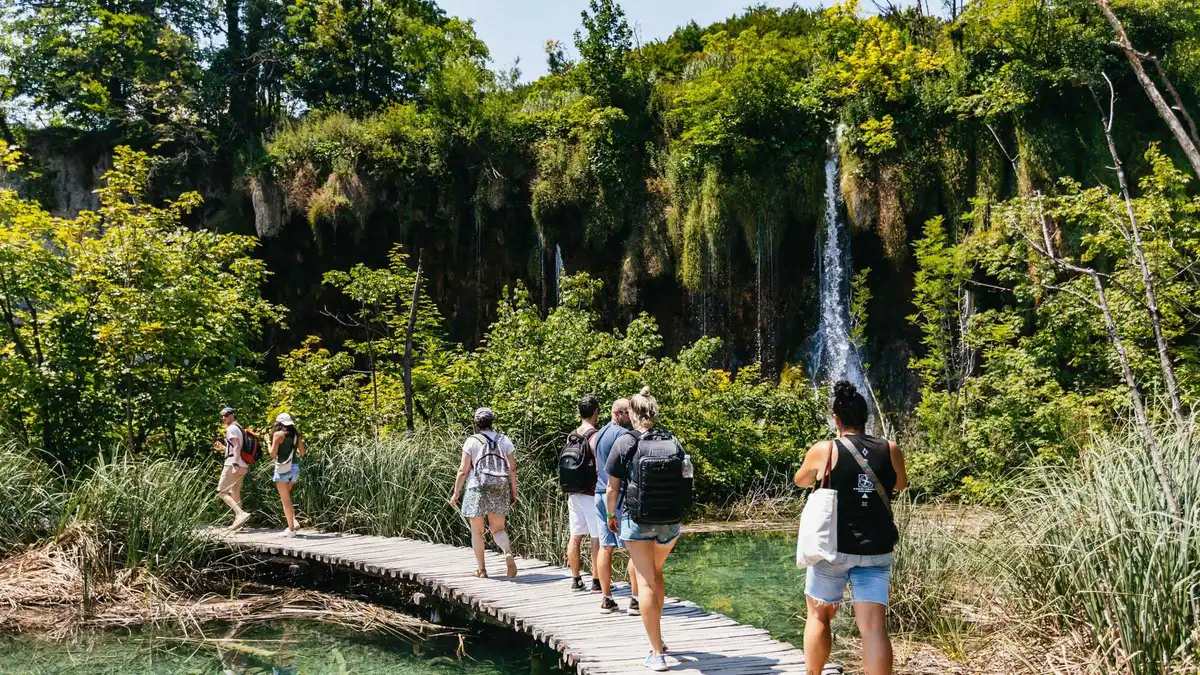 from $103.23
Plitvice day trip from Split with the dated entry ticket included — the booking-problem solver.
Check Availability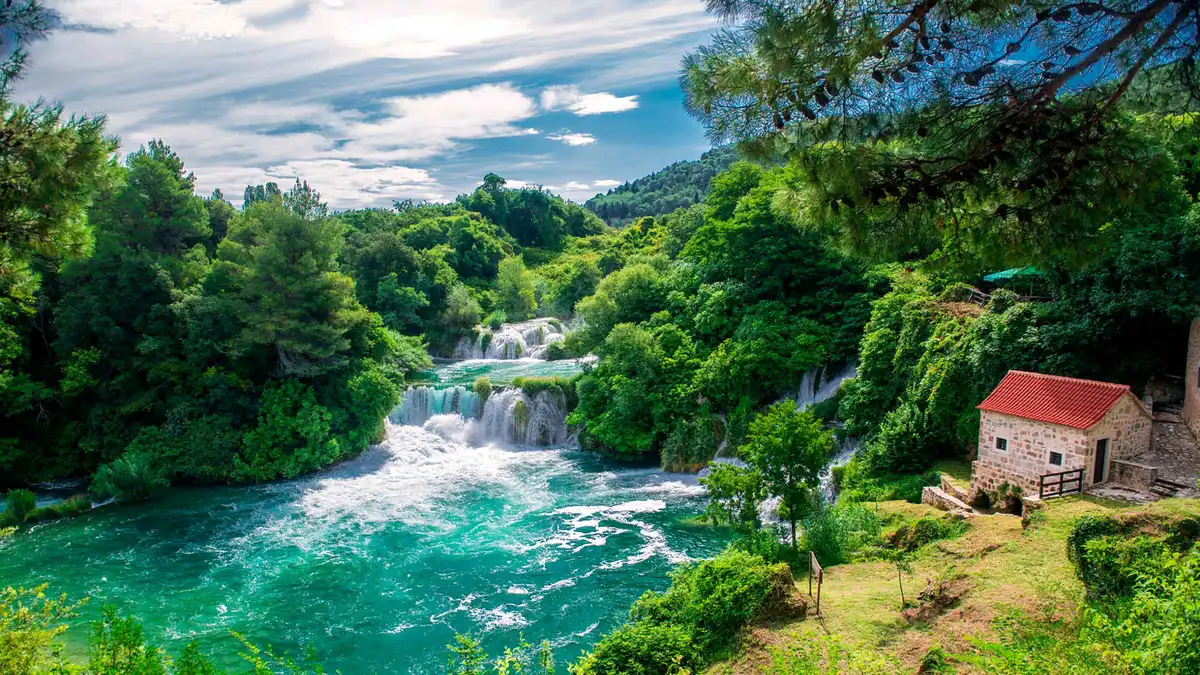 from $30.45
Krka waterfalls day trip from Split with the boat ride, Sibenik stop and a non-falls swim stop.
Check Availability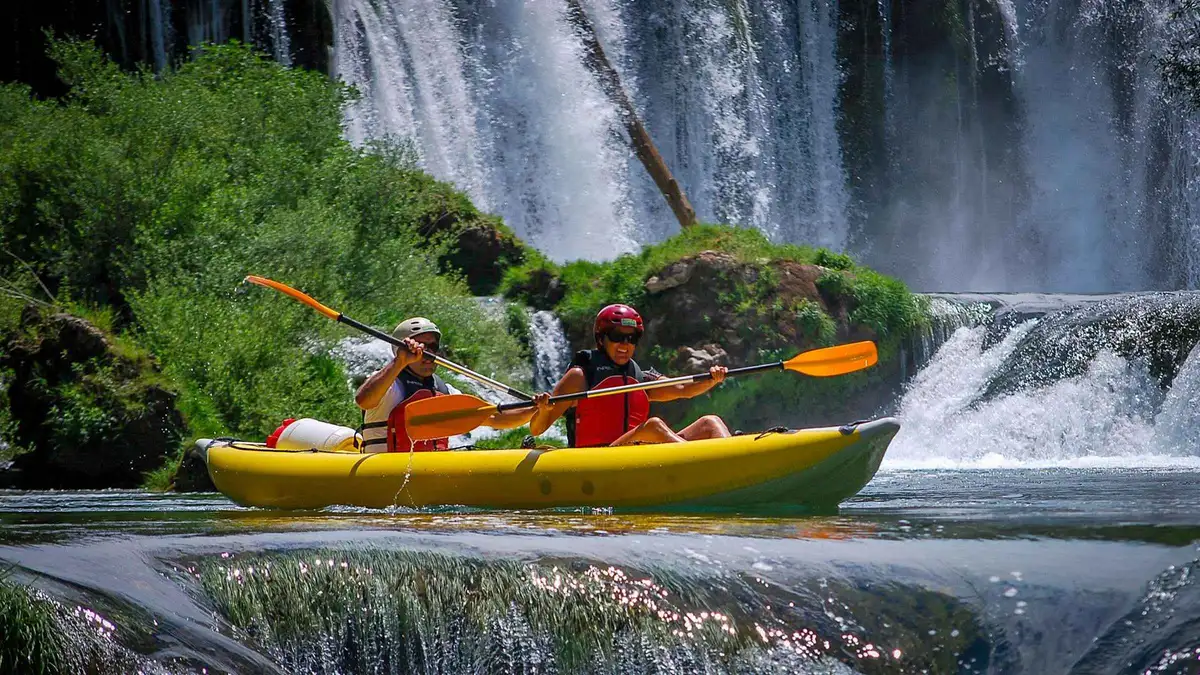 from $63.79
Half-day guided kayak run down the Zrmanja canyon's easy rapids from Kastel Zegarski.
Check Availability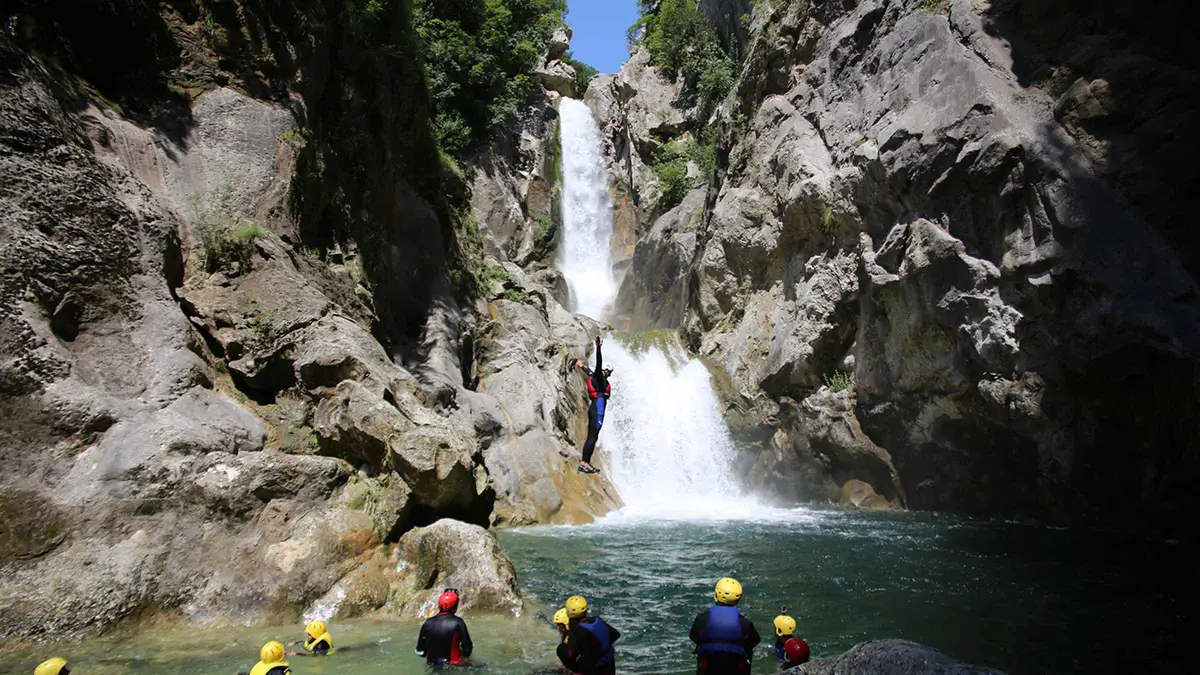 from $57.99
Canyoning day on the Cetina from Split — pools, jumps and the Gubavica rappel with gear included.
Check AvailabilityPrices, ratings and details are the platform's own, checked in Q3 2026; dollar figures are the listed prices — the platform bills in your account's currency.
A waterfall trip here is one of Europe's cheaper nature holidays, and the money goes to three lines: park tickets, wheels, and beds. The two flagship parks cost roughly €10-40 per adult day depending on the seasonal band you land in — the ticket page carries the full table — and everything on the free list costs nothing but fuel. A hire car at €35-55 a day unlocks the half of the country the buses ignore: the Mrežnica swimming cascades, Štrbački buk on the Una, the Istrian streams, the Zrmanja put-ins. Without a car, the bus corridors Zagreb→Plitvice and Split/Zadar→Krka work well, and day tours cover the rest — the mode-by-mode comparison prices every option.
Beds price by proximity: rooms in Rastoke, Slunj or the Plitvice hinterland start near €50-70 in shoulder season and double in July-August, while Skradin, Skradin-side Krka villages and Zadar or Šibenik trade distance for supply. A realistic mid-range day — one park ticket, a hire car shared by two, a konoba lunch and a mid-range room — lands around €120-180 per person; a shoestring day built on the free rivers and a guesthouse kitchen runs €55-80 excluding accommodation.
Direct answers to the questions that decide a waterfall trip in Croatia, each linking the page that owns the detail:
Not at the two parks — bathing at Plitvice is forbidden outright and Krka banned it in January 2021, with patrols and fines. Legal swim-under-the-falls country starts on the Mrežnica, Zrmanja, Una and the Istrian streams. See the legal-swim list.
For scale and the 78 m drop, Plitvice; for half a day from the coast and a boat ride, Krka. The comparison page prices tickets, crowds and timing by trip type. Read the full comparison.
Both parks price adult day passes in seasonal bands that run roughly €10-40, with child and student reductions; the ticket page carries the current official bands and links. Check the 2026 bands.
Yes for Plitvice and Krka — direct buses run from Zagreb, Split and Zadar, and day tours cover the rest. The Mrežnica cascades and Štrbački buk are the awkward ones without wheels. Compare buses, tours and cars.
Plitvice runs its cheapest and quietest band and sometimes freezes into an ice gallery; Krka keeps its boat running; the swim rivers are out. The winter guide sets expectations month by month. Read the winter guide.
Yes for the classic lower-lakes circuit with the boat — four to five hours does it; two days buy the upper lakes in soft light without the midday rush. The park page breaks down every route option. See the route options.
Shoes with real grip — wet travertine boards are slick — plus a swim kit for the free rivers, a dry layer for the parks, and a phone lanyard for boat decks. The packing page lists the lot. See the packing list.
Veliki Slap at Plitvice, a 78 m fall off the lake system's cliff edge — loudest in spring, a lace curtain by late summer. The Veliki Slap page times the walk to its base viewpoint.
On the free rivers: the Mrežnica cascades, the Zrmanja and Krupa pools, the Una below Štrbački buk, and the Istrian streams. The two national parks ban bathing — Krka since January 2021. The legal-swim page maps every option.
Roughly 130 km and 1 h 45 by car on the A1/E65, with direct buses from Zagreb's main station taking about two and a half hours. The getting-around page compares every mode with fares.
Online-dated tickets are sold through the official store and the busiest July-August mornings do sell out; the ticket page explains the dated-entry mechanics and when to buy. See the Plitvice tickets guide.
Yes — the boardwalk circuit across Skradinski buk, the included boat ride from Skradin and the watermill museum carry the visit; swimmers simply redirect to the Mrežnica or Zrmanja the same day. The Krka page builds both halves.
Rastoke (token mill-area fee), Štrbački buk, the Krka's upstream falls outside the paid zone, the entire Mrežnica, the Zrmanja and Krupa, and the Istrian falls — the free waterfalls list sorts them by region with access notes.
April to early June, after the snowmelt and spring rains; by late August the Plitvice ribbon thins and the Krčić spring-fall can disappear entirely. The best-time page grades every month for flow, crowds and price.
The parks' boardwalks, Rastoke's lanes and Vražji prolaz's walkway all work with school-age kids; canyoning and the Krupa scramble do not. The family page grades each site by age and stroller reality.