 Croatia Waterfalls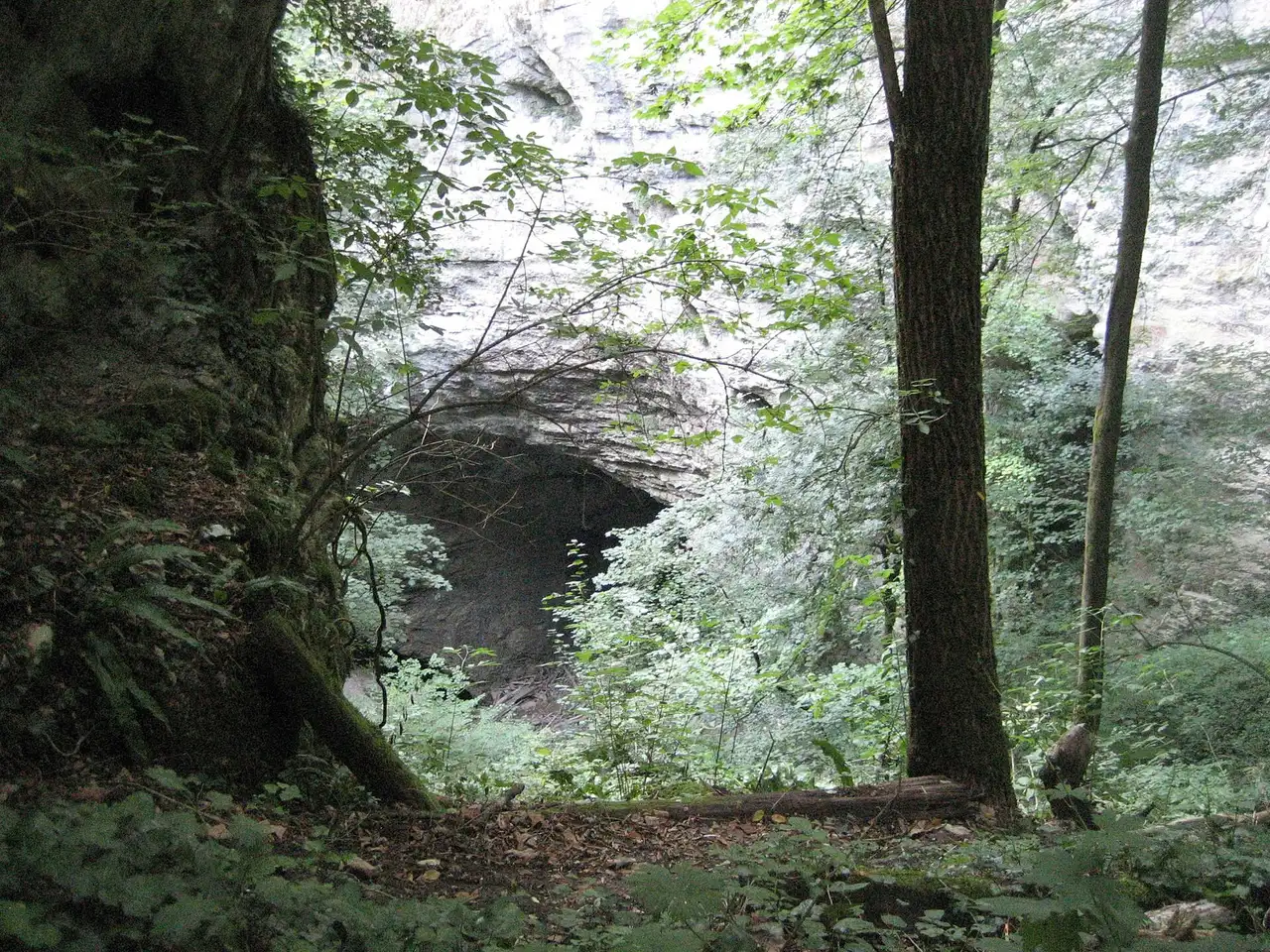
The chasm that English-language guides index as Pazinska jama — the Pazin abyss — is the karst portal beneath Pazin castle, where the Pazinčica runs about a hundred metres below the largest and best-preserved medieval fortress in Istria and then simply vanishes: the largest underground river of the peninsula dives into the cave system that gave the chasm its other name, the Pazin pit. The rim is free — a viewpoint from the castle edge, an educational trail of 1.1 km starting at the Vršić bridge, and paths along the chasm that the tourist board calls the most striking example of karst evolution in Istria. The underground is another matter: entry is guided-only, through a speleo adventure run with experienced cavers into the first explored sections. Jules Verne set the escape of Mathias Sandorf through this cave in his 1885 novel, and the castle museum keeps the connection alive. This page covers the rim, the trail, the guided cave and the Verne file.
Quick answer The free rim, the 1.1 km trail, the guided-only cave and the Verne connection in one read
Verified this quarter: the chasm's open-air parts are free — the viewpoint from the castle edge, the rim paths and the 1.1 km educational trail starting at the Vršić bridge. The cave itself is guided-only: a caving adventure with experienced speleologists explores the underground sections of the system the Pazinčica disappears into. The chasm runs about a hundred metres deep; the first explored cave section measures 270 m. Jules Verne sent Mathias Sandorf escaping through this cave in his 1885 novel, and the castle above holds the Ethnographic Museum of Istria. The direct bookable product is the Pazin adrenaline-and-culture tour; the soft alternative is the Inner Istria day tour.
Key takeaways
- Free rim: castle-edge viewpoint, chasm paths and the 1.1 km trail from the Vršić bridge.
- The cave is guided-only — speleo adventures run with experienced cavers and book ahead.
- Scale: the chasm about 100 m deep; the first explored cave section 270 m long.
- Jules Verne wrote the castle-to-cave escape into Mathias Sandorf (1885).
- Pair with the surface river: the walk-behind roof at Zarečje upstream.
Key facts
Opening hours
| Viewpoint edge and castle surroundings — open access | Daylight–Daylight |
|---|---|
| Educational trail (1.1 km from the Vršić bridge) | Daylight–Daylight |
Closed None for the open-air site; the guided cave adventures and the zipline run on operators' schedules and book ahead
Admission
- Adult
- Free for the viewpoint edge, the chasm paths and the educational trail (checked 2026-09-13); the guided cave adventure and the zipline are priced by their operators
- Reduced
- Operator-dependent for the cave and zipline products
- Free
- The castle-edge viewpoint, the chasm rim paths and the 1.1 km trail from the Vršić bridge
Planning it
- Time needed
- 1 h for the rim and the trail; half a day with a guided cave adventure
- Book ahead
- Optional — walk-up usually fine
- Address
- Pazin chasm beneath Pazin Castle, Pazin, Istria County, Croatia
Pazinska Jama Tickets: Free Rim, Guided Cave and the Two Tours
The open-air chasm costs nothing, verified this quarter; the money sits in the guided underground and the adrenaline products. The table separates them.
Decide the depth of the visit — rim, trail, or underground:
| Option | Window | Price | What it covers | Where it books | Book |
|---|---|---|---|---|---|
| Central Istria tourist board page — Pazin abyssAnyone visiting the rim and the trail | Open-air site, daylight hours | Free | The chasm rim, the castle-edge viewpoint and the 1.1 km educational trail | Official page | Official site |
| Pazin – Adrenaline and CultureVisitors who want the underground done safely and legally | Booked departures | From ~$162 on the card | The cave traverse through the abyss with the castle visit — the direct product for this site | Tour card | Check Availability |
| Guided Inner Istria tour with food tastingVisitors preferring culture and food over ropes | Scheduled departures | From ~$107 on the card | The hill towns plus Pazin — context without the underground | Tour card | Check Availability |
| Entering the cave aloneEveryone — this is the hard rule | All year | A rescue, not an adventure | Access is guided-only; the system floods with the Pazinčica and the first sections demand caving technique | Skip it — book a guide | Check Availability |
| The zipline over the chasmZipline bookers who skip the fine print | Operator season | Operator-set price and rules | Age and weight limits apply and change by operator — confirm before promising it to the family | Skip the assumption | Check Availability |
What the Abyss Is
One river, one chasm and one disappearing act — the most textbook example of karst hydrology in Istria.
The Pazinčica, the largest underground watercourse of the Istrian peninsula, runs its short surface life through Pazin and loses it at the castle: the river drops into a chasm about five hundred metres long and a hundred metres deep, whose walls hold the largest and best-preserved medieval fortress in Istria on one rim. At the chasm's end the water dives into the cave — Pazinska jama, the Pazin pit — whose first explored section runs 270 metres underground before the passages narrow to the system that carries the river toward the springs on the west coast.
The science here is old and famous: Édouard-Alfred Martel, the founder of modern speleology, partially explored the cave in 1896, and the site has been a classroom for karst hydrology ever since. The tourist board's description calls it the best example of karst landscape evolution in Istria; the local legend of the giant Dragonja, who stamped open the pit in a rage, is the pre-scientific version of the same story. In flood the Pazinčica roars into the pit; in drought the chasm floor goes quiet and the cave mouth stands dry.
The chasm dimensions (about 500 m long, about 100 m deep), the 270 m first explored section, Martel's 1896 exploration and the hydrology follow the Istria Culture heritage pages and the Pazin Wikipedia entry, verified this quarter.
Jules Verne, Mathias Sandorf and the Castle
The literary file is not a legend: Verne put this exact castle and cave into a novel, and the town has built a festival on it.
In Mathias Sandorf (1885), Jules Verne's heroes escape from the Castle of Pazin into the abyss below it — the novelist, who never visited, worked from descriptions and maps that circulated widely in France, and the chasm's shapes in the book follow the real pit closely enough that the town claims the book as local literature. The castle-and-gorge pairing also drew Dante comparisons in the older travel writing, and the Central Istria tourist board lists both authors on its abyss page.
Pazin has institutionalised the connection: the castle above the pit holds the Ethnographic Museum of Istria and the town's museum, and the summer Jules Verne days turn the chasm into a stage for the novel's escape. For a visitor, the honest order is: read the rim first from the castle terrace, walk the educational trail to see the pit's full geometry, then decide whether the underground justifies a guided booking — the novel's cave and the real cave overlap, but the real one is wetter.
- Mathias Sandorf (1885): the heroes escape the Castle of Pazin into the abyss.
- Dante comparisons thread the older travel writing on the pit.
- The castle holds the Ethnographic Museum of Istria.
- Summer Jules Verne days stage the escape in the chasm.
The 1885 novel, the escape plot and the Dante association follow the official Croatia tourism page and the Istria Culture heritage notes, verified this quarter.
Four Ways Into the Abyss
The table lays out the ways of seeing the chasm, from the free rim to the guided underground, using the tourist board's descriptions and the tour platform's prices verified this quarter.
| Way in | Depth of visit | Cost | Booking | Who it suits |
|---|---|---|---|---|
| Castle-edge viewpoint | The chasm and the cave mouth in one frame | Free | None | Everyone; the first ten minutes |
| Educational trail from the Vršić bridge | 1.1 km along the rim; the pit's full geometry | Free | None | Walkers; the geometry-minded |
| Guided speleo adventure | The first underground sections with cavers | Operator-priced | Book ahead | The sure-footed; headlamp people |
| Zipline over the chasm | The pit from above at speed | Operator-priced (lines to ~280 m reported) | Book ahead | Adrenaline-first visitors |
Visiting: the Castle Edge, the Trail and the Guided Cave
The site reads in three layers, each with its own logistics.
The castle edge is the zero-effort visit: from the terrace above the pit the cave mouth, the chasm walls and the town's roofline stack into one view, and the Ethnographic Museum of Istria inside the castle extends the stop into a proper museum visit. Below the rim, the educational trail starts at the Vršić bridge and runs 1.1 km along the chasm — the walking route the tourist board recommends — passing the potholes and driftwood evidence of the river's floods.
The underground is a booked affair. Guided caving adventures descend with experienced speleologists into the first explored sections; equipment is provided, the trip runs to operator schedules, and the same operators run the zipline whose long line crosses the chasm — travel reports put the lines at up to 280 metres. Upstream, the surface river adds its own stops: the Pazinski krov slab and, beyond Zarečje, the walk-behind roof described on the Zarečki krov page. In flood season the Pazinčica fills the pit's throat with noise; in drought, plan the visit for the museum and the trail instead.
- Sturdy shoes for the rim path — the chasm edge is unfenced in places.
- Booked slot and closed shoes for the cave adventure; headlamps provided.
- Rain upstream means a louder pit and, in flood, closed paths.
- Museum time in the castle for the Verne and ethnography context.
The trail length and start point, the guided-only cave access and the zipline follow the Central Istria tourist board page and operator reports, verified this quarter.
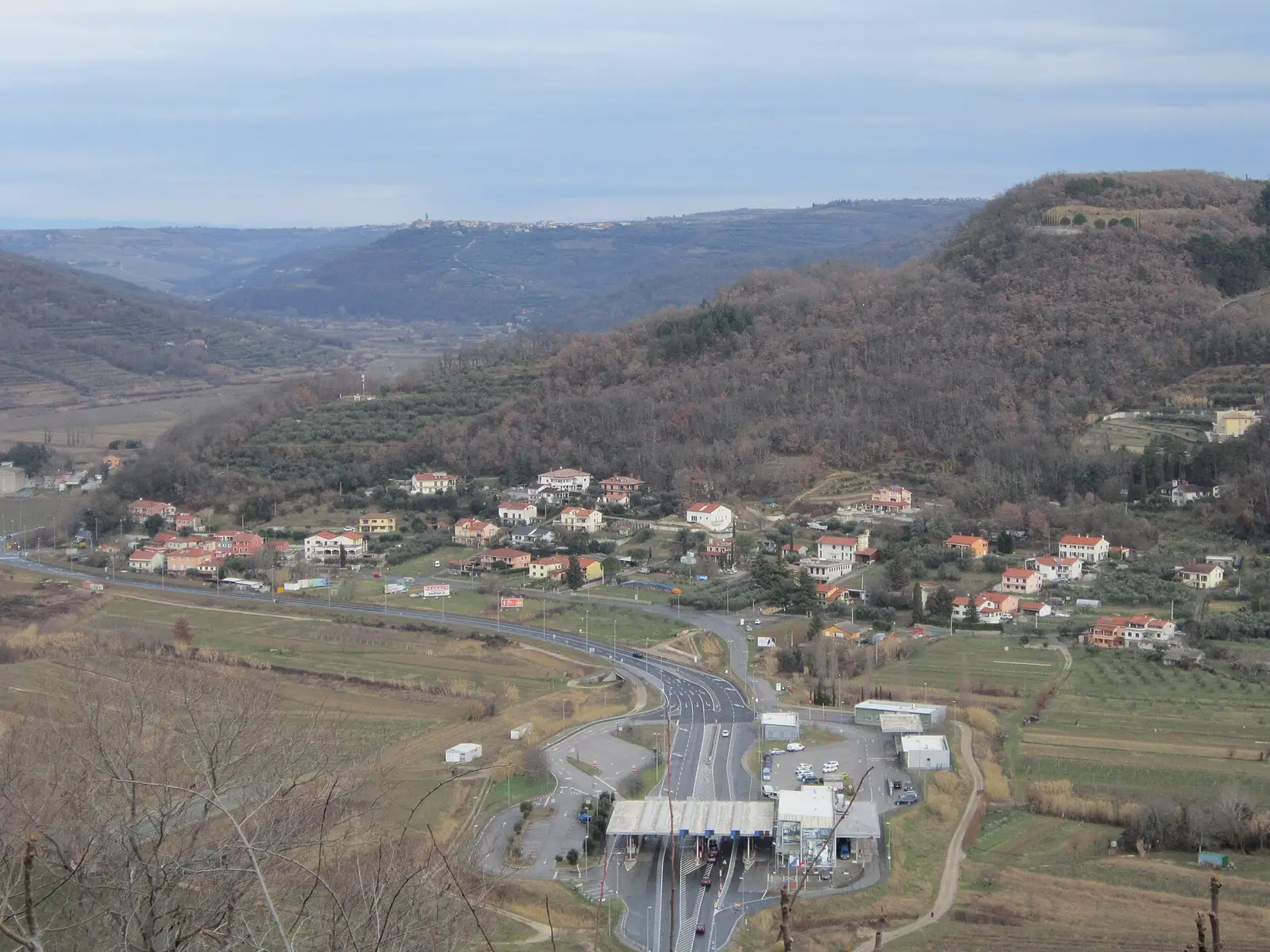
The karst plumbing of inner Istria: the pictured Sopot fall near Buzet and the Pazinčica share the same rain-fed water table — full in spring, silent in drought, underground somewhere in between.
Pazinska Jama Map: the Castle, the Chasm and the Valley
The abyss and its trail with the surface-river anchors upstream toward Zarečje.
The Tours That Serve the Abyss
One product enters the underground legally: the Pazin adrenaline-and-culture tour with its cave traverse. The Inner Istria day tour is the soft alternative for the town, the castle and the food — neither is a ticket you can buy at the pit itself; both book ahead.
 from $106.71
Istria: Guided Tour of Inner Istria with Food Tasting
Inner-Istria day tour through the hill towns with a Pazin stop and local food tasting.
Check Availability
from $106.71
Istria: Guided Tour of Inner Istria with Food Tasting
Inner-Istria day tour through the hill towns with a Pazin stop and local food tasting.
Check AvailabilityPrices, ratings and details are the platform's own, checked in Q3 2026; dollar figures are the listed prices — the platform bills in your account's currency.
Pazinska Jama: Questions, Answered
Can you enter the cave on your own?
No — access to the underground is guided-only, run as caving adventures with experienced speleologists. The system carries a live river and floods with it; the first sections demand caving technique. The rim and the trail are the free, open parts.
How deep is the abyss?
The chasm runs about a hundred metres deep and five hundred metres long; the first explored cave section beyond the pit adds 270 metres underground. Figures vary slightly by source, and the deeper system extends well past the explored showpiece.
Did Jules Verne really use Pazin in Mathias Sandorf?
Yes — in the 1885 novel the heroes escape from the Castle of Pazin into the abyss below, a plot Verne built from maps and descriptions without visiting. The town has adopted the book: the castle museum keeps the file and summer events stage the escape.
Is the zipline worth it?
It is the fastest way to feel the chasm's scale — reports put the longest line near 280 metres over the pit. It is an operator product with its own price and limits, so treat it as an add-on to the free rim rather than the visit's purpose.
How do I get to the viewpoint?
Park in Pazin town; the castle terrace above the pit is a few minutes' walk from the centre, and the 1.1 km educational trail starts at the Vršić bridge for the rim-level walk. Both are free.
When does the Pazinčica flow?
Seasonally: spring and autumn fill the river and the pit roars; in summer drought the surface flow can fail and the chasm goes quiet. The underground watercourse runs all year — you just cannot see most of it.
How does this pair with the rest of Istria's falls?
Directly upstream: the valley trail out of town passes the Pazinski krov slab and reaches the walk-behind roof at Zarečje. The Mirna headwater pools at Kotli and the tall Sopot fall near Buzet complete the inland day by car.
Where to Go From the Abyss
The pages this one leans on — the river above, the region and the booking mechanics:
Zarečki krov
The walk-behind roof upstream — the surface river's best swimming stop.
Istria waterfalls
The peninsula's waterfall frame, seasons and map.
Croatia waterfall tours
The full bookable tour directory, including the Pazin cave product.
Kotli
The cauldron-pool mill village on the Mirna headwaters, west of Pazin.
Best time to visit
When the Pazinčica runs, when it dries, and what each season changes.
We may earn a commission if you book through one of our links, at no extra cost to you. Full affiliate disclosure