 Croatia Waterfalls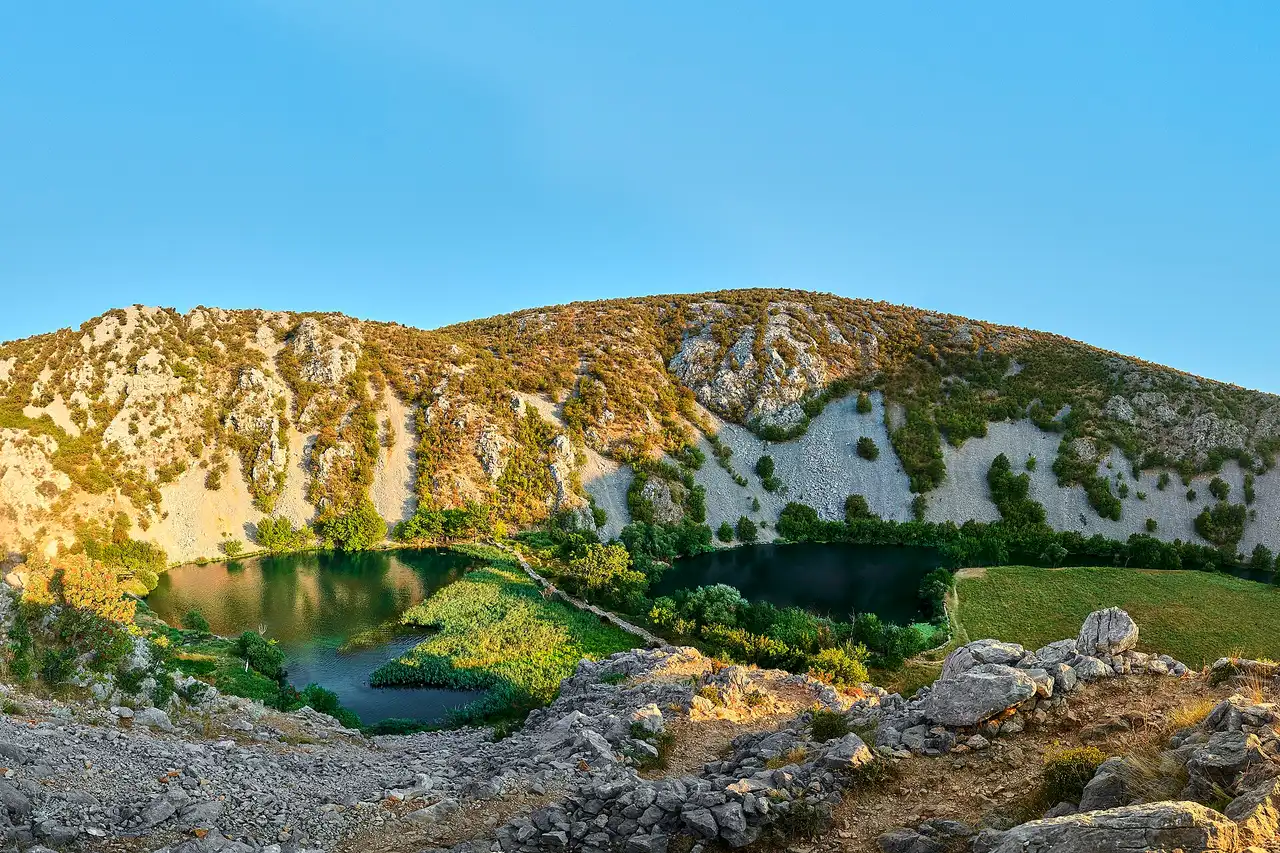
The Zrmanja waterfalls are not a single wall of water but a system: a 69-kilometre karst river cutting a canyon up to 200 metres deep through the southern rim of Velebit, fed by a tributary — the Krupa — that builds its own staircase of tufa terraces before joining the main current near Sastavci. The water runs emerald over white limestone, and the rapids sit within an hour of Zadar. The canyon has a second life on film: between 1962 and 1968 it doubled for the American West in the Karl May Winnetou pictures, with the Apache village set standing above the river. Today the practical entry is by kayak — the guided half-day from Kaštel Žegarski covers the rapids and the calm pools — or by road, to the bridge at Muškovci and the Krupa's Deveterac terraces. This page covers the water, the access points, the film backstory and how the day strings together; the paddle product is priced on the Zrmanja kayaking page and the tributary's own falls on the Krupa falls page.
Quick answer Getting on the water, the Krupa terraces and the film history in one read
Verified this quarter: the Zrmanja runs 69 km from its spring in southern Lika to the sea near Obrovac, and the canyon reach below Kaštel Žegarski is the famous stretch — emerald water, rapids, walls up to 200 m deep. The standard entry is the guided half-day kayak from that put-in; road visitors aim for the Muškovci bridge and the Krupa's Deveterac terraces, where nine travertine cascades end in a 13-metre fall crossed by an old tufa bridge. The canyon doubled for the American West in the Karl May Winnetou films shot here, 1962-1968. Pricing on the Zrmanja kayaking page; the tributary's falls on Krupa falls.
Key takeaways
- Kayak first, drive second: the rapids read differently from water level.
- The Krupa's terraces and tufa bridge are the best free sight in the system.
- Rafting runs on spring and autumn water; kayaks take over in the July-August low weeks.
- No gate fee, no permit — village-road logistics and wild water.
Key facts
Opening hours
| Open river — daylight use | sunrise–sunset |
|---|---|
| Guided kayak season (operator schedule) | 08:00–17:00 |
Closed Never closed as a river; commercial trips concentrate April-October and low water shapes the programme in July-August
Admission
- Adult
- Self-guided access is free; the guided half-day kayak trip prices from ~$64 on the tour card (checked 2026-09-13)
- Reduced
- Operators set child and group rates per trip; no public-fee structure applies to the river itself
- Free
- Roadside viewpoints at Muškovci and the Krupa terraces; no permit for day visits
Planning it
The Water and the Access Points
Five fixed points organise a Zrmanja day, from the paddle start to the paired park. Booking tiers: 2 = reserve ahead, 1 = plan it, 0 = drive in. Checked this quarter.
The canyon and the terraces
-
Kaštel Žegarski put-in
Village / kayak start Guided half-day from ~$643-4 h on the waterbook-ahead tier 2 of 3
Where the guided trips start: a calm first kilometre, then the rapids. Pricing on the Zrmanja kayaking page.
-
Deveterac vrela on the Krupa
Travertine terraces / nine cascades Free access1-1.5 h
Nine travertine cascades ending in a 13-metre fall, crossed by Kudin most, a 109-metre tufa-arch bridge. Route on the Krupa falls page.
-
Muškovci bridge lookout
Roadside viewpoint Free access30-45 min
The easiest drive-up look at the canyon: green water under the walls, the old film sets on the rim above, and the traditional launch for independent paddlers.
Bases and pairings
-
Zadar, the base city
Base city / day-trip radius Free to plan aroundAbout 1 h by road
The canyon is Zadar's freshwater day trip: under an hour inland and paddleable through summer. The full radius on the waterfalls near Zadar page.
-
Krka, the paired canyon
National park / barrier falls Seasonal bands, roughly €10-40 peakA separate day, 1 h by roadbook-ahead tier 1 of 3
The green-water look continues west at Krka — bigger barriers, boardwalks, tickets, and a swimming ban. Mechanics on the Krka waterfalls page.
Numbers match the list — tap a pin for the guide.
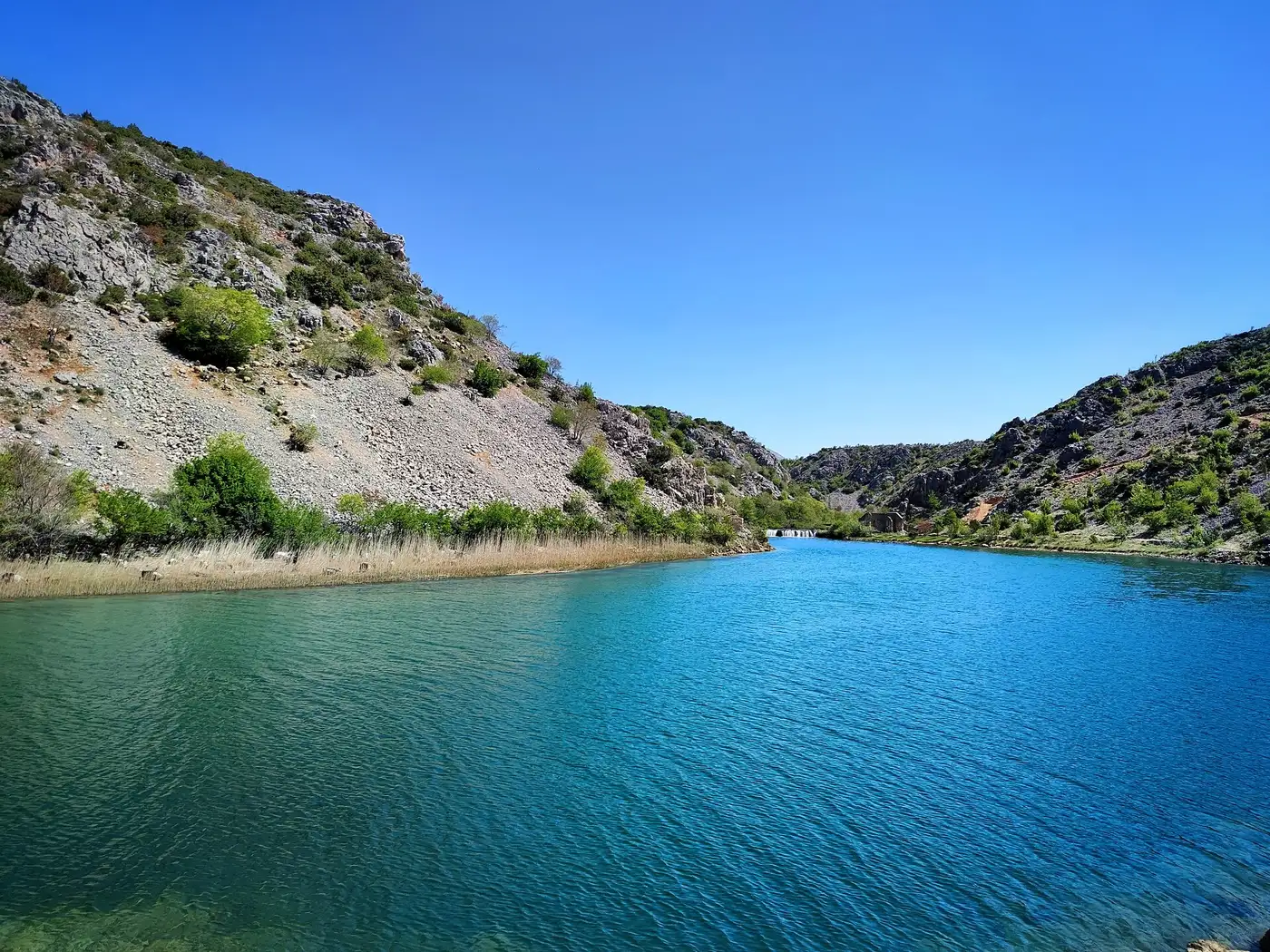
White rock and emerald current are why location scouts chose the canyon for the American West: from water level the walls read as monument country, not Mediterranean karst.
The Zrmanja Day Out Compared
The table weighs the three real ways to spend the day, using operator listings and county board access notes, verified this quarter. Water levels shift the picture seasonally.
| Option | Access | Time | Water contact | Cost logic |
|---|---|---|---|---|
| Guided half-day kayak | Kaštel Žegarski put-in | 3-4 h | Full: rapids, pools, swims | From ~$64; gear and guide included |
| Independent paddle | Same put-in; own or rented craft | Half a day | Full, self-timed | Free on the river; rental priced locally |
| Drive-and-look circuit | Muškovci bridge, Krupa track | 2-3 h | Feet only | Free; normal car in dry weather |
| Rafting on spring water | Operator put-ins | Half a day | Full and cold | Priced per operator; spring and autumn |
The Water: Put-In, Terraces and the Lookout
The Zrmanja system splits into three practical destinations, and each answers a different kind of traveler.
The river rises from the Misije spring under the Plješevica massif, then commits to the canyon — up to 200 metres deep — bending west toward Obrovac and the sea. The famous reach is the middle one: emerald current over white travertine, easy-to-moderate rapids in normal summer water, and pools deep enough to swim between the drops. The tributary Krupa adds a quieter, walking-scale version of the same geology nearby.
Nothing here is managed like a national park — no ticket desks, no boardwalks, no lifeguards; village-road access and informal viewpoints are the deal.
Kaštel Žegarski: the kayak start
The village where the guided trips stage their put-in: a gravel reach and a calm first kilometre before the rapids. The standard product is a half-day with a guide — wetsuits in the shoulder months, a dry bag in summer — ending at a vehicle take-out. Season calendar on the Zrmanja kayaking page.
- Half-day format, roughly 3-4 h door to door from Zadar.
- Easy-to-moderate rapids in normal summer water; bigger in spring.
- Book ahead in July-August — the put-in has finite daily capacity.
Deveterac vrela: the Krupa's staircase
Below the Krnjeza confluence the narrow Krupa canyon opens onto a broad travertine barrier — Deveterac, named for its nine cascades, ending in a 13-metre waterfall. The anchor sight is Kudin most: a 109-metre drystone bridge on twelve tufa arches, protected alongside the 1317 Krupa monastery nearby. The approach is the Krupa's canyon track, passable in a normal car in dry weather.
Route on the Krupa falls page.
Muškovci bridge: the drive-up lookout
For travelers with two hours rather than a day, the bridge at Muškovci is the shortcut: a stone bridge over the green current, canyon walls on both sides, and the nearest road-level look at the stretch the film crews used. Swim here and you share the bend with kayaks. Combine it with Deveterac for the fullest free visit the system offers.
- Park off the roadway at the village edge — the bridge is working infrastructure.
- Water shoes: the banks are stone, not sand.
- Dry-weather roads only for the gravel stretches; no facilities at either stop.
River length, canyon depth and the Krupa's terraces, bridge and monastery follow the Wikipedia articles on the Zrmanja and the Krupa, verified this quarter.
The Film Canyon and How to Plan the Day
Half the Zrmanja's fame is geological and half is cinematic, and the day plan works better with both on the table.
Between 1962 and 1968 the canyon starred as the American West: the German Karl May productions — the Winnetou cycle — shot their exteriors across this corner of Croatia, and on the Zrmanja the Apache village set stood above the river. The sets are long gone, but from water level the limestone shelves and dry-grass rims read exactly as the Southwest did on screen; guides pass the locations as a running commentary.
The planning logic follows the water calendar. Spring and autumn bring the high water rafts want; July and August drop the river to clear low flow, which is when kayaks take over.
Winnetou country, verified
Exterior shooting for the Karl May films ran in this region from 1962 to 1968, with Winnetou I (1963) and Winnetou III (1965) among the titles using the canyon and the Velebit rim above it. Nothing is fenced or signposted on site — driving the canyon roads for the views is, functionally, touring the shooting locations.
- Shooting window: 1962-1968, the canyon as the recurring Western landscape.
- The Apache village set stood above the river; no structures survive.
- Tulove grede, the ridge above the canyon, was another Karl May location.
Water levels and the season
Spring and autumn carry the volume rafting operators build seasons around; by July the river settles into low, clear water and the kayak programme becomes the default; August is the busiest and warmest, with the pools at their swimmable best. There is no gauge a visitor can check at a gate — the operator schedule is the working test. If a paddle is the point, book the seat; the drive-and-look circuit works on any settled-weather day.
- April-May: high water, rafting season, cold — take the layers operators provide.
- July-August: low clear water, kayaks only, warmest pools, busiest put-in.
- September-October: stabilising flow, quiet canyon, sharp light on the rim drives.
How the day strings together
From Zadar the drive inland is about an hour, and the format decides the clock. The paddle morning: on the water by 09:30, off by early afternoon. The drive-and-look afternoon: Muškovci first, the Krupa terraces second.
Ambitious days chain the canyon with Krka's gates the next morning — the park sits an hour west and makes the contrast point about managed versus wild water. The Krka waterfalls page carries the ticket bands and boat rules for that leg.
- Fuel and water before leaving the coast road — services thin past Obrovac.
- Cash for village kiosks; card terminals are rare in the canyon villages.
- Check the operator's water call the evening before — karst rivers reschedule.
Film history from documented Karl May shooting-location records (1962-1968, Zrmanja canyon); seasonal water logic from operator programmes, verified this quarter.
The Tour That Covers the Canyon
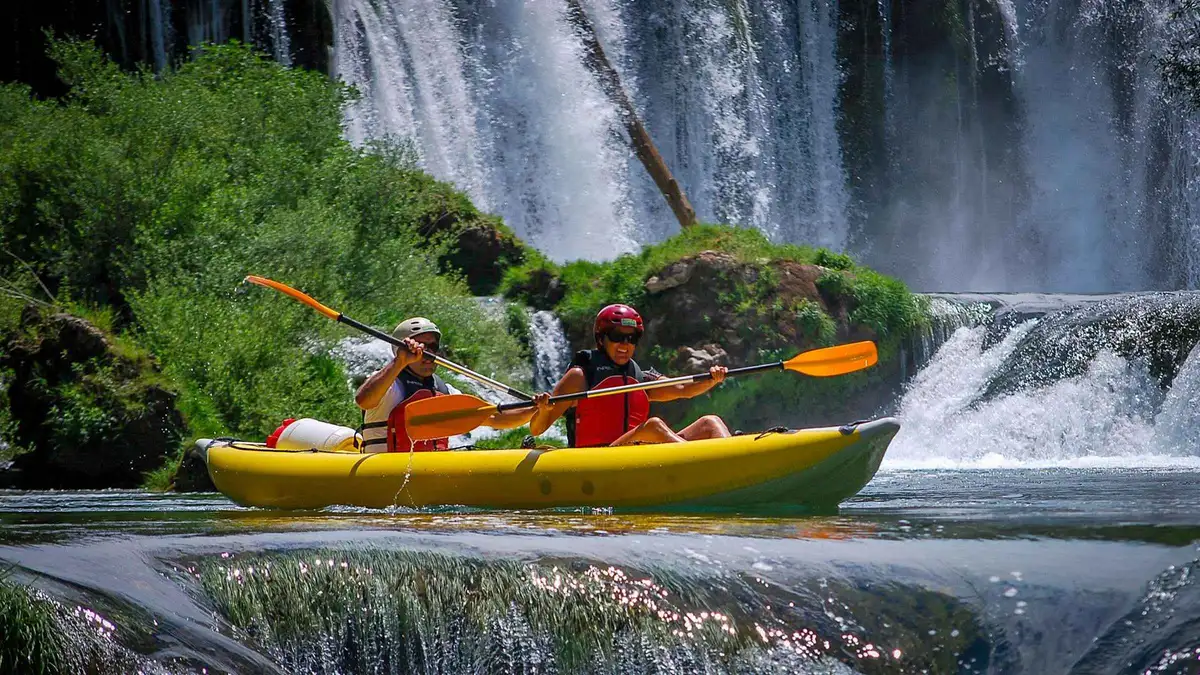
One bookable product serves the river: the guided half-day kayak from Kaštel Žegarski, which converts the put-in, the gear and the shuttle into a single reservation for coast-based visitors.
 from $63.79
Zrmanja River: Half-Day Guided Kayaking Tour Near Zadar
Half-day guided kayak run down the Zrmanja canyon's easy rapids from Kastel Zegarski.
Check AvailabilityPrices, ratings and details are the platform's own, checked in Q3 2026; dollar figures are the listed prices — the platform bills in your account's currency.
Zrmanja Questions, Answered
Can you swim in the Zrmanja?
Yes — no part of the river sits inside a national park and there is no bathing ban. Paddlers swim the calm bends in summer. Treat it as wild water: no lifeguards, cold in the deep sections.
Where do the kayak trips start?
At Kaštel Žegarski, the village put-in about an hour from Zadar. Pricing and structure are on the Zrmanja kayaking page.
What are the nine springs above the canyon?
The Krupa's famous barrier: nine travertine cascades ending in a 13-metre fall, crossed by Kudin most, a 109-metre tufa-arch bridge. Route on the Krupa falls page.
Is this really the canyon from the Winnetou films?
Yes. The Karl May productions shot exteriors here from 1962 to 1968, with the Apache village set standing above the river. The sets are gone; the walls remain.
When is the water highest?
Spring and autumn. That is rafting season; summer low water shifts everything to kayaks. After heavy autumn rain the rapids rebuild fast — the operator schedule is the practical gauge.
Do you need a ticket or permit?
No. The river is free public water with no gate infrastructure; the only paid item is a commercial trip seat. Parking is informal at the villages.
Where the Canyon Connects
The pages this one leans on — the paddle product, the tributary's falls, the base city and the paired park:
Zrmanja kayaking
The guided half-day from Kaštel Žegarski: format, gear, pricing.
Krupa falls
The tributary's terraces, the tufa bridge and the 1317 monastery.
Waterfalls near Zadar
The Zadar day-trip radius mapped and compared: this canyon plus Krka.
Krka waterfalls
The managed counterpart: barriers, boat arrivals, the swimming ban.
The waterfalls road trip
Seven days chaining every region, with the canyon slotted in.
We may earn a commission if you book through one of our links, at no extra cost to you. Full affiliate disclosure