 Croatia Waterfalls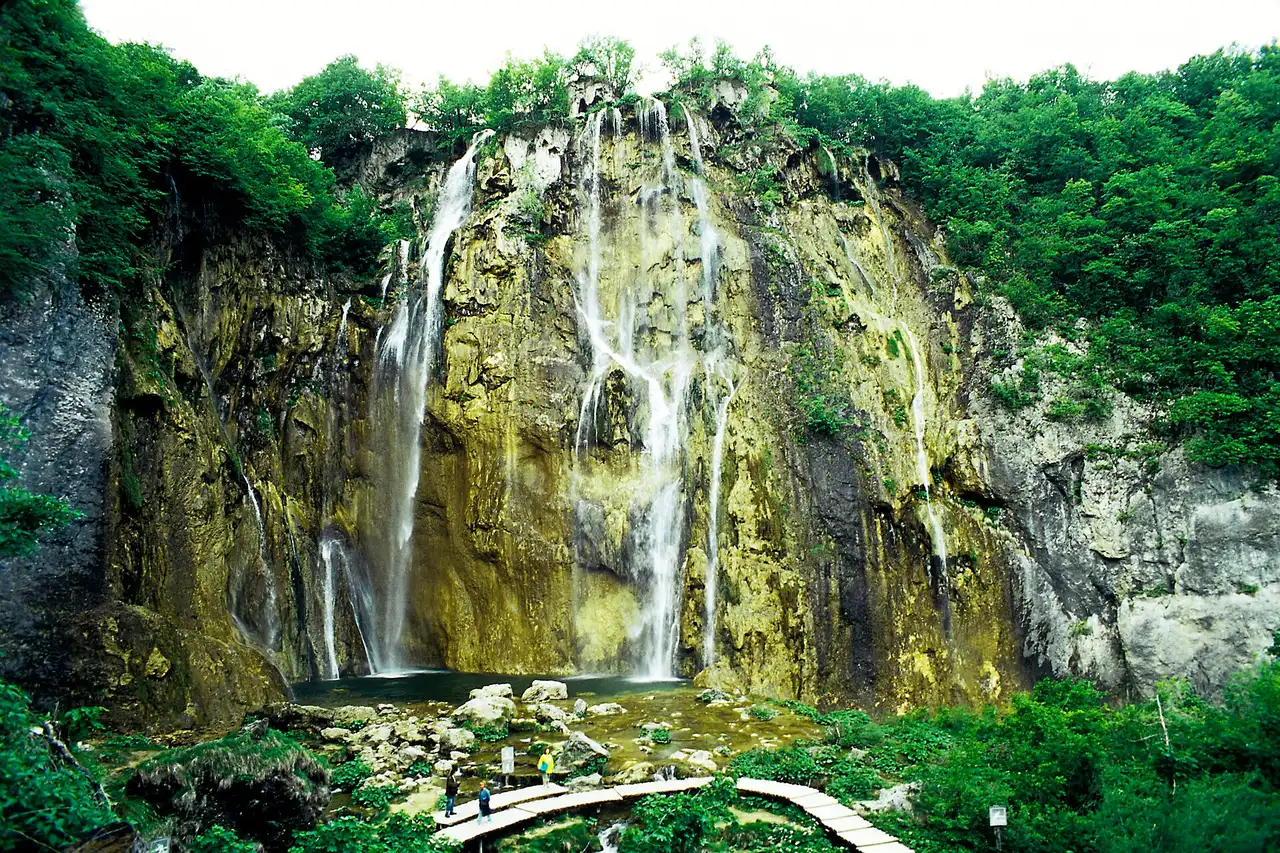
The Veliki Slap is the waterfall that ends the show at the Plitvice Lakes: after sixteen terraced lakes have stepped the water down 133 metres of karst, the Plitvica stream leaves the last pool and drops 78 metres of bare limestone cliff into the Korana valley — the tallest single waterfall in Croatia. It sits at the foot of the lower-lakes circuit below Entrance 1, so a visit needs no boat and no train: the canyon boardwalks deliver you to its base within half an hour of the turnstiles. This page covers the fall itself — where the platforms stand, how the flow changes between the spring flood and the thin late-summer ribbon, which ticket band and route programme fit the visit, and the rules that actually get enforced. Booking mechanics sit on the Plitvice tickets page, the full park layout on the Plitvice lakes guide, and the honest comparison with its Dalmatian rival on plitvice or krka.
Quick answer Ticket bands, the route to the base platform, seasonal flow and the rules in one read
Verified this quarter: the fall stands inside the Plitvice Lakes National Park, so it costs a park ticket — one-day bands of €10, €23 or €40 by season, with a €25 late-day band after 16:00 (15:00 in September), boats and trains included. The shortest visit is Programme A from Entrance 1: 3.5 km and 2-3 hours through the lower-lakes canyon, ending at the platform below the fall. Spring is the loud season; by late summer the ribbon thins to a fraction of its spring volume. Swimming is banned, drones are banned, and the dated summer tickets sell out. Booking mechanics on the Plitvice tickets page; the route programmes on the park guide.
Key takeaways
- The fall is included in every park ticket — no separate fee, no separate booking.
- Programme A from Entrance 1 is the shortest route that ends at the base: 2-3 hours, 3.5 km, no boat needed.
- Peak-day tickets (€40) are dated and capped; the €25 late-day band after 16:00 halves both price and crowd.
- Spring shows the fall at full volume; August thins it to a narrow ribbon on the rock.
- No swimming anywhere in the park and no drones — both rules are enforced with fines.
Key facts
Opening hours
| Published schedule, all entrances (current calendar) | 07:00–19:00 |
|---|---|
| Parking lots at Entrances 1 and 2 | 07:00–20:00 |
Closed The park opens 365 days a year; closing hours shift with the seasonal calendar and ticket desks stop selling in the late afternoon of the current schedule
Admission
- Adult
- One-day bands €10 (1 Jan-31 Mar and 1 Nov-31 Dec) / €23 (1 Apr-31 May and October) / €40 on peak days 1 Jun-30 Sep, with a €25 late-day band after 16:00 (after 15:00 in September) — official 2026 price list, checked 2026-09-13
- Reduced
- Children 7-18 €4 / €6 / €15 (€9 late-day); students with a valid card €6 / €14 / €25 (€15 late-day); two-day tickets €15 / €39 / €60
- Free
- Children up to 7 years; visitors with a 50%+ disability and one accompanying person
Planning it
- Time needed
- 45-60 min at the fall; 2-3 h for the lower-lakes circuit it ends
- Book ahead
- Recommended — a few days
- Address
- Plitvička Jezera National Park, Entrance 1 (Rastovača), Croatia
Veliki Slap Tickets: The 2026 Bands and the Tours
The bands below come from the official 2026 price list, verified this quarter, and the tour figures print from the booking platform. Every ticket that enters the park covers the fall; the decision is really about the date, the hour band and whether a car is involved.
Pick a dated ticket for the morning you want, or ride a tour bus that solves the ticket and the drive together:
| Option | Season / window | Adult price | What it covers | Where it books | Book |
|---|---|---|---|---|---|
| Dated one-day ticket, official storeIndependent travelers with a fixed date | All year; bands by season | €10 / €23 / €40 by band; €25 late-day after 16:00 (15:00 in September) | Entry, electric boats, panorama trains, insurance — the fall included | Official dated store | Official site |
| Official price listAnyone pricing a non-peak date or a two-day pass | Season bands 1 Jan-31 Mar / 1 Apr-31 May / 1 Jun-30 Sep / October / 1 Nov-31 Dec | Two-day tickets €15 / €39 / €60 | Same inclusions across two consecutive days | Official price list | Official site |
| Guided day trip from Split, entry tickets includedCoast-based visitors without a car | Daily departures in season | From ~$103 on the card | Transport, dated park ticket, guide | Tour card | Check Availability |
| Guided trip from Zagreb with ticket, Plitvice and RastokeZagreb-based visitors who also want the mill village | Daily departures in season | From ~$110 on the card | Transport, entry, the Rastoke stop on the way | Tour card | Check Availability |
| The walk-up gamble on a peak August dayNobody — this is the mistake to avoid | July - August, roughly 11:00 - 15:00 | €40 and possibly sold out | No dated ticket against a 600-per-hour entrance cap | Skip it — book dated entry | Check Availability |
What the Great Waterfall Is
One number explains the fall's status — 78 metres — and one word explains its shape: tufa, or rather the absence of it.
Veliki slap (the Great Waterfall) is the odd one out in the Plitvice system. The park's famous barriers are living tufa dams that grow a few millimetres a year as mosses and algae precipitate carbonate from the water; the sixteen lakes sit behind them like saucers on a staircase. The Great Fall is different: the Plitvica stream leaves the last pool at the Sastavci barrier and throws itself off a sheer limestone cliff into the Korana valley, dropping 78 metres in a single plunge — Croatia's tallest waterfall. The cliff is rock, not tufa, which is why the fall photographs as a white ribbon on grey stone.
The geography matters for planning. The fall sits at the bottom of the lower-lakes canyon — the sequence of Milanovac, Gavanovac, Kaluđerovac and Novakovića brod — and the green-marked routes from Entrance 1 end there, making it the natural exit of every short visit: from the turnstiles, the boardwalks descend past a chain of viewpoints to the platform at the fall's foot. The sixteen-lake system it drains has been a national park since 1949 and a UNESCO natural World Heritage Site since 1979.
Dimensions and designations from the park's published materials and the UNESCO listing, verified this quarter.
How the Flow Changes Through the Year
Plitvice's water comes from karst aquifers, and the fall's ribbon tracks the rainfall calendar with a lag of weeks.
Spring is the loud season. Snowmelt and spring rain fill the karst aquifers that feed the lakes, and between roughly April and June the Great Fall runs at its heaviest, with spray drifting across the lower boardwalks and the base platform wearing a permanent mist. By late summer the aquifer drops: the ribbon thins to a narrow white line on the rock face, sometimes splitting into several threads in a dry August. This is the trade every visitor makes — May and late September balance decent flow against thinner crowds, while a peak-week August visit buys the full timetable and the thinnest waterfall of the year.
Autumn rain rebuilds the flow and October colour frames it; early winter is the wild card, when the barriers freeze into ice staircases and the Great Fall can freeze partially or fully. The practical rule for any season: check the park's current-conditions notes the morning of the visit, because ice closes lake-edge boardwalks and heavy rain can reroute sections. The month-by-month grading sits on the best time to visit page, and the off-season mechanics in the winter guide.
- April-June: maximum flow, spray on the platforms, the photographer's window.
- July-August: peak crowds, thinnest ribbon of the year — arrive early or late.
- October: rebuilt flow and autumn colour on a shoulder ticket.
- Winter: partial freezing possible; boardwalk network shortened by ice.
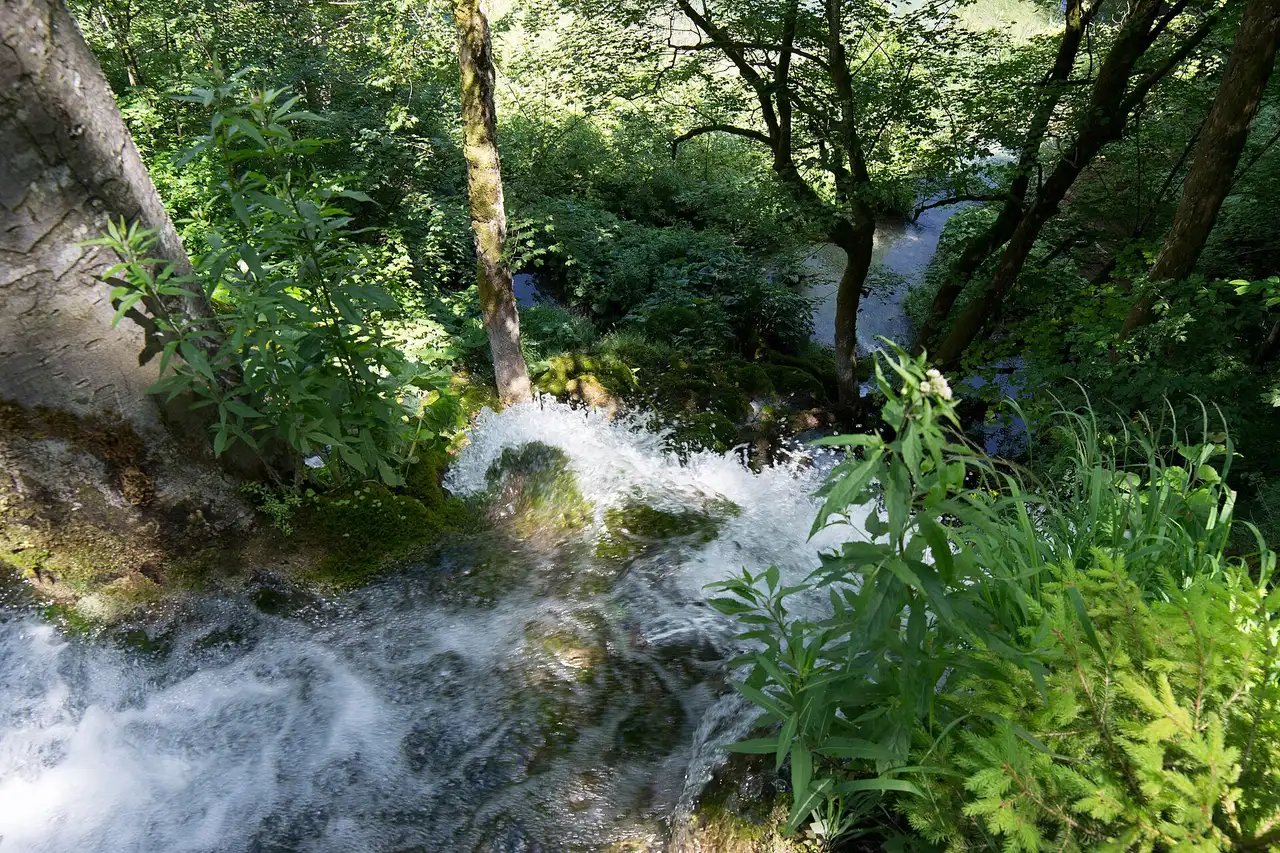
The sixteen lakes step down behind living tufa barriers before the water leaves the system and drops off the rock cliff of the Great Waterfall — the fall's volume is the whole staircase's volume.
Where to Stand: The Veliki Slap Viewpoints Compared
The fall is seen from a handful of fixed points on the lower circuit; the table compares them using the park's own route distances and the practical access notes verified this quarter.
| Viewpoint | Where it sits | Reach it via | What you see | Best time |
|---|---|---|---|---|
| The base platform (Sastavci) | At the fall's foot, valley bottom | Programme A boardwalks from Entrance 1 | The full 78 m ribbon overhead; spray and noise in spring | Early morning; last hour before close |
| The lower-canyon boardwalks | Along the lower lakes above the fall | Programme A or B | The fall framed by the canyon walls, looking down the chain of green pools | Mid-morning on the way down |
| The canyon-rim viewpoints | On the slopes above the lower lakes | The hilly alternative trail on the lower circuit | The whole canyon from above with the fall at its end | Any hour; never crowded |
| Tomićevo Pogledalo (K1 route) | The high balcony over the lake system | Programme K1 from Entrance 1 (16.5 km) | The staircase of lakes as a single design — the fall is distant but contextualised | Full-day walkers only |
The Ladder From the Upper Lakes to the Great Fall
Read top to bottom as the water flows: the sixteen lakes and their barriers descend the karst, and the system saves its one vertical gesture for the very bottom.
- Upper-lakes stairway (Prošćansko to Galovac) many small steps Thirteen pools linked by low white tufa barriers; most of the system's 133 m descent accrues here.
- Lake Kozjak one flat pool The largest lake (47 m deep) sits flat; electric boats cross it every half hour.
- Lower-lakes chain (Milanovac to Novakovića brod) stepped tufa barriers The canyon boardwalks thread four green pools down to the last barrier.
- Sastavci cascade the final terrace Where the Plitvica waters run together toward the valley — the wide platform at the top of the final drop.
- Veliki slap 78 m single plunge The Plitvica stream leaves the lake system and drops off the limestone cliff — Croatia's tallest waterfall.
Veliki slap's 78 m is the park's official figure; the intermediate steps are rounded context from the published 133 m total descent of the system.
Veliki Slap Map: Entrance 1, the Canyon and the Platforms
The lower-lakes circuit below Entrance 1, from the turnstiles through the canyon viewpoints to the base platform at the fall.
Plitvice Day Tours That Include the Great Fall
Every Plitvice day trip reaches the fall as part of its route programme; these products handle the dated ticket and the drive from Zagreb or the coast.
 from $110.19
Zagreb: Plitvice & Rastoke Guided Trip with Ticket (ENG/ESP)
Semi-private day trip from Zagreb pairing the Plitvice lakes with the Rastoke mill village, ticket included.
Check Availability from $417.55
From Zagreb: Plitvice Lakes Guided Day Trip
Full-day guided Plitvice trip from Zagreb with the classic route programme and guide commentary.
Check Availability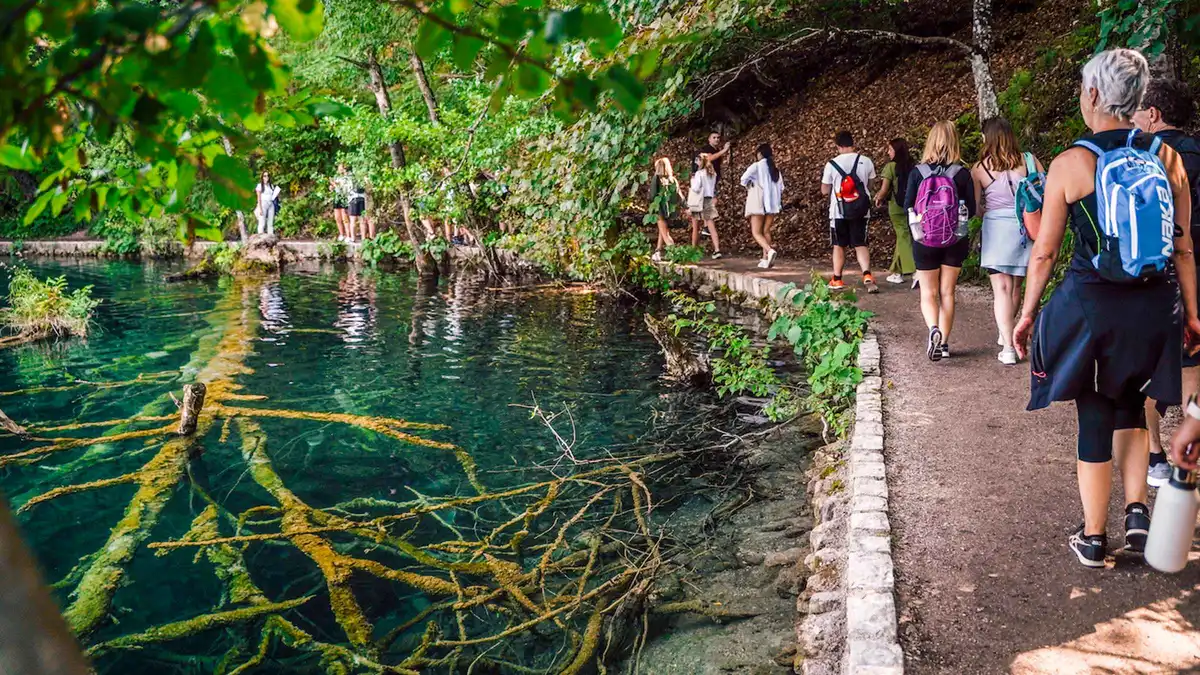 from $75.39
From Split: Plitvice Lakes National Park Guided Tour
Guided Plitvice day tour from Split covering the UNESCO lake terraces with hotel-zone pickup.
Check Availability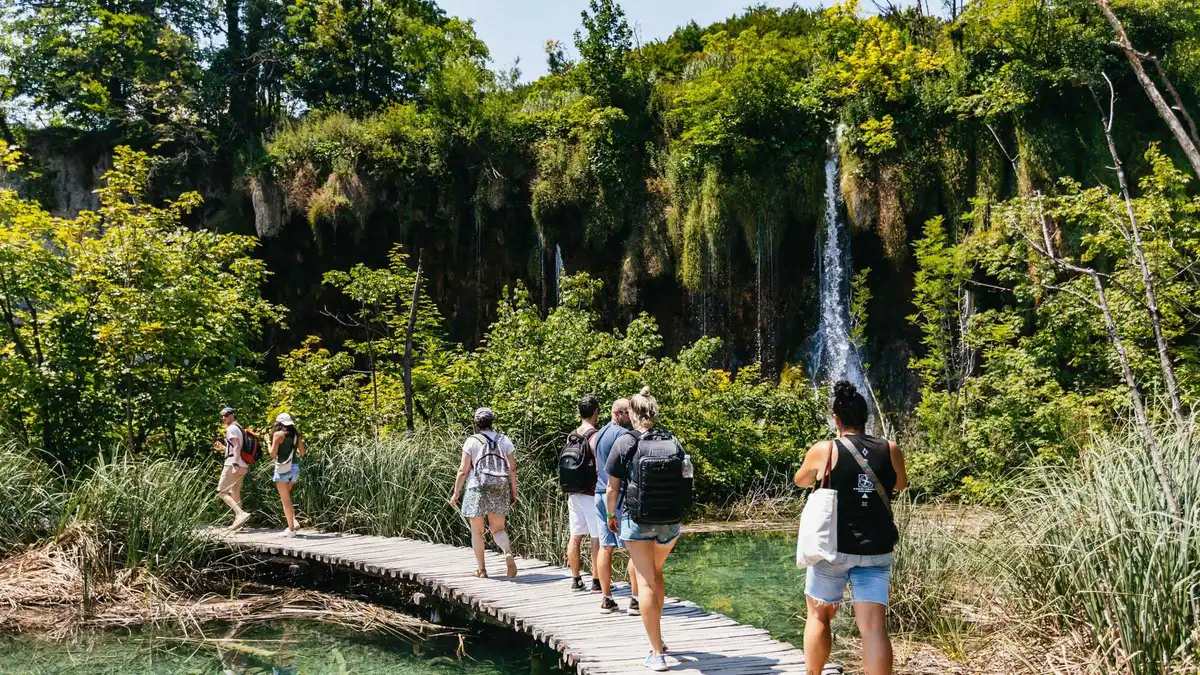 from $103.23
From Split: Plitvice Lakes Guided Tour with Entry Tickets
Plitvice day trip from Split with the dated entry ticket included — the booking-problem solver.
Check Availability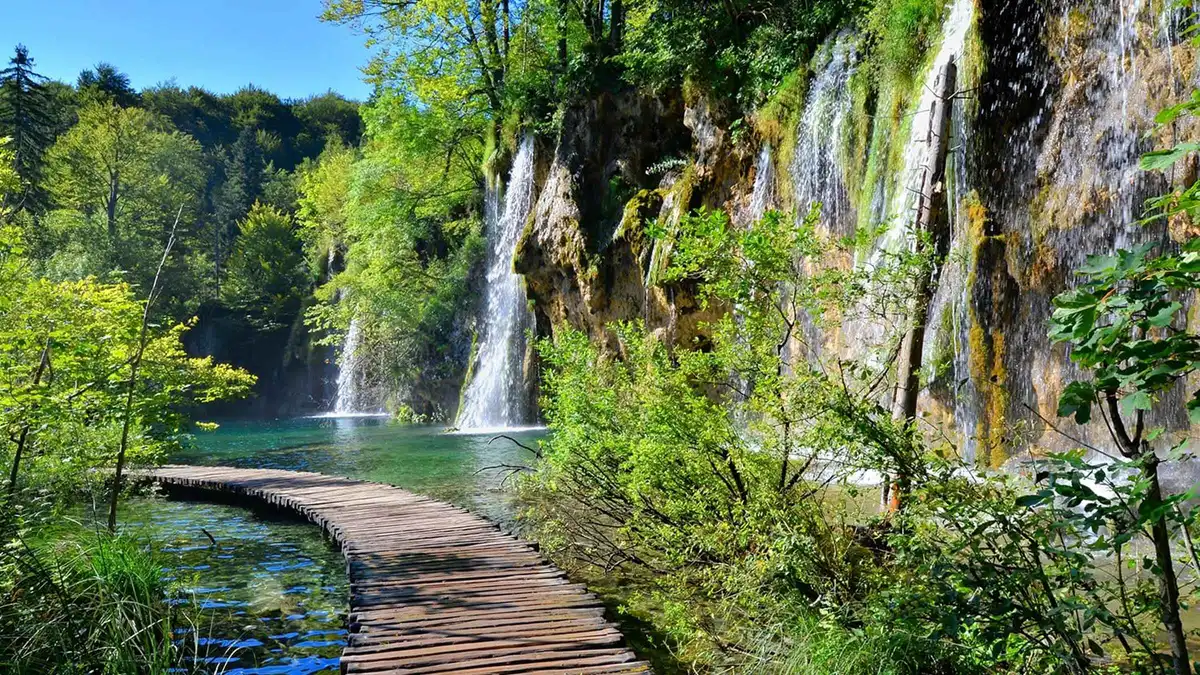 from $75.39
From Split: Plitvice Lakes Fully-Guided Day Tour
Fully-guided Plitvice day tour from Split through the lake terraces and the big fall.
Check Availability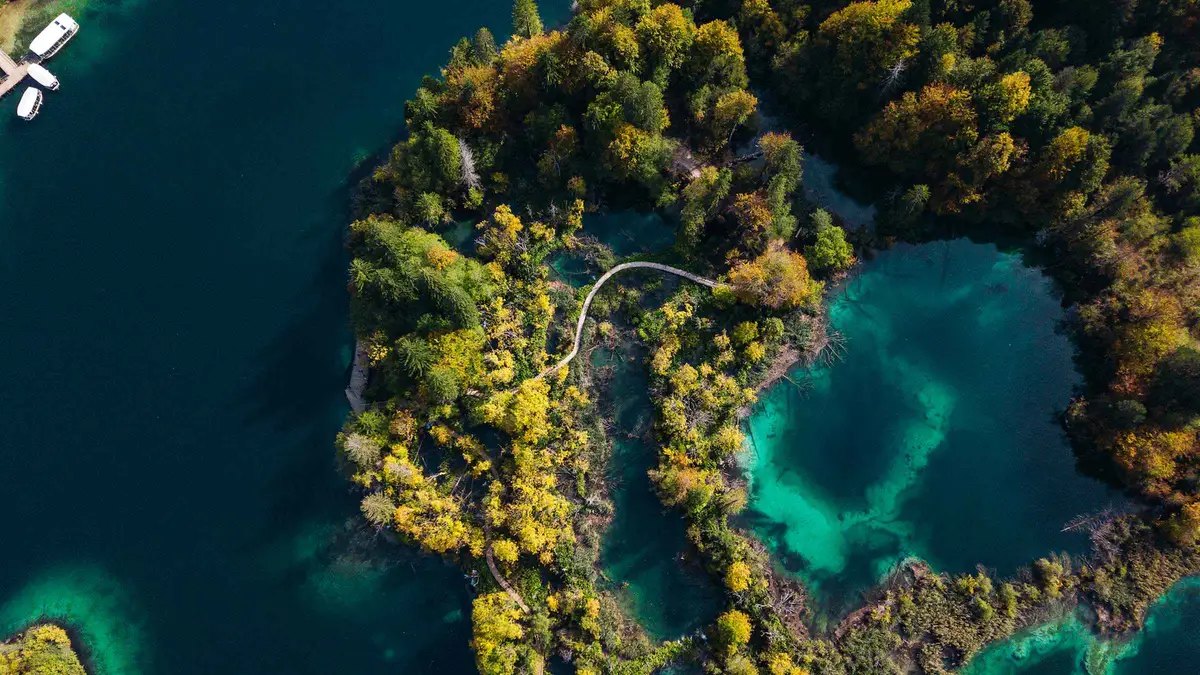 from $57.99
Split: Self-Guided Plitvice Lakes Day Tour with Boat Ride
Budget self-guided Plitvice day trip from Split with coach transport and the boat ride.
Check AvailabilityPrices, ratings and details are the platform's own, checked in Q3 2026; dollar figures are the listed prices — the platform bills in your account's currency.
Veliki Slap: Questions, Answered
Is the fall included in the normal park ticket?
Yes. Every one-day and two-day ticket covers the whole park zone, and the Great Waterfall sits inside it — there is no separate fee, no separate gate and no boat required to reach it. The only ticket decision is the seasonal band and the date.
How do I get to the base of the fall?
From Entrance 1, the green-marked lower-lakes routes descend through the canyon to the Sastavci platform at the fall's foot — 3.5 km and 2-3 hours round trip on Programme A, the park's shortest route. From Entrance 2 you cross Lake Kozjak by boat first; the base platform is the same.
When does the fall carry the most water?
Spring, roughly April to June, when snowmelt and rain fill the karst aquifers — spray reaches the boardwalks. By late summer the ribbon thins noticeably, and in a dry August it can narrow to threads. Autumn rain rebuilds the flow through October.
Can you swim in the pool at the bottom?
No. Swimming is banned across the entire national-park zone, including the Korana valley below the fall, and rangers enforce the ban. The lawful swim-under-a-cascade rivers are listed on the legal swimming page.
Is the 78 m figure really the tallest in Croatia?
Yes — 78 metres in a single plunge makes it the country's tallest waterfall, and the figure is the park's official one. Other Croatian falls are wider or stepped, but nothing single-drops higher.
How much time should the visit take?
45-60 minutes covers the base platform if you arrive by boat or train; add the canyon walk from Entrance 1 and the realistic budget is 2-3 hours on Programme A, or 3-4 with the boat loop of Programme B. Route durations are compared on the park guide.
Are drones allowed for filming the fall?
No. Remotely controlled aircraft are banned in the park; only controlled commercial filming with a permit is possible. Rangers respond quickly in the canyon, and the fine is not worth the footage.
What if the dated tickets are sold out for my day?
Check the official store for the late-day band (€25, entry after 16:00, or 15:00 in September), which is released separately and sells out later. Otherwise shift to a shoulder date — the bands are laid out on the Plitvice tickets page.
Where to Go From the Great Fall
The pages this one leans on — the park around it, the booking mechanics and the trip decisions:
Plitvice Lakes guide
The full park: sixteen lakes, all lettered route programmes, boats, trains and the crowd wave hour by hour.
Plitvice tickets
The dated-entry system, band-by-band prices and the booking channels, step by step.
Rastoke
The mill village at Slunj where the Slunjčica meets the Korana — the natural corridor stop.
Plitvice or Krka
The honest park-versus-park comparison by base, season and how many days you have.
Waterfalls near Zagreb
The Zagreb day-trip radius: the park, Rastoke and the Mrežnica swims.
We may earn a commission if you book through one of our links, at no extra cost to you. Full affiliate disclosure